

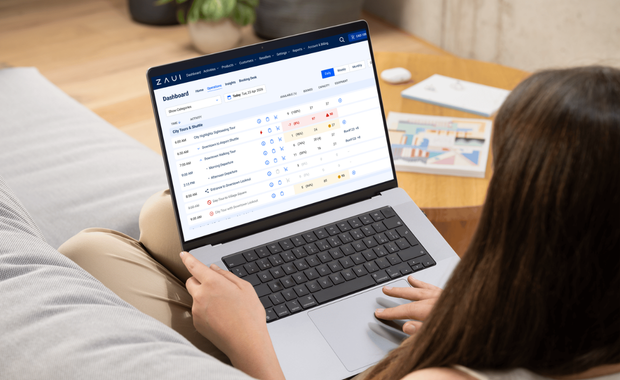

Complete Guide to Enterprise Tour Reservation Systems
If you run a tour, activity, or transportation company, you already know how quickly a growing calendar becomes impossible to manage. A single spreadsheet or entry-level booking widget might handle your first hundred reservations, but the moment you add a second vehicle, open a second departure point, or partner with a hotel concierge desk, the cracks appear fast. Overbookings slip through, staff waste hours reconciling availability, and revenue leaks through gaps that no manual process can close.
Enterprise tour and activity reservation software exists to solve exactly that problem. This guide explains what separates an enterprise reservation system from basic booking tools, which capabilities matter most, and how to evaluate platforms when your operation is ready to scale.
What Is Enterprise Tour and Activity Reservation Software?
Tour and activity reservation software is the technology layer that sits between your customers and your operations. It captures bookings, enforces capacity rules, distributes availability to sales channels, processes payments, and feeds data back to your team in real time.
At the entry level, these tools do little more than accept online payments and send confirmation emails. At the enterprise level, the same platform becomes a central nervous system: it connects your website, your phone agents, your OTA listings, your reseller network, and your operations dashboard into a single source of truth.
Enterprise-grade platforms are designed for operators who run multiple products, multiple departure times, multiple staff members, and multiple revenue streams simultaneously. They eliminate the manual coordination work that slows scaling operators down and creates costly errors. Zaui's all-in-one booking software is built specifically for this level of complexity, covering tours, activities, and transport in a single system.
Why Tour and Transport Companies Outgrow Basic Booking Tools
Basic booking software is designed for simplicity. That simplicity is its greatest strength at the start, and its greatest weakness as you grow. Here are the most common pressure points that push operators toward enterprise solutions.
Inventory management becomes unmanageable
When you operate one tour in one vehicle, inventory is simple. Add a second vehicle, a third tour type, or a seasonal variant, and the combinations multiply fast. Basic tools typically lack the ability to link seat availability across products or share capacity across vehicle types. The result is either frequent overbooking or over-blocking, both of which cost you money. Enterprise platforms like Zaui offer a dedicated inventory and availability management engine that handles this complexity automatically.
Multi-channel distribution creates conflicts
Selling through your own website is a starting point, not a ceiling. Most operators quickly add OTA listings, hotel desk partnerships, group sales, and affiliate resellers. Without centralized reservation management, availability shown on one channel is not automatically reflected on others. A booking from TripAdvisor may not reduce the seats your hotel partner believes are still open, and a phone reservation may not update your OTA listing. Each gap is an overbooking waiting to happen. Zaui's Channel Manager eliminates this by syncing availability across every channel in real time.
Scheduling complexity exceeds manual capacity
Multi-vehicle tour operator scheduling is qualitatively different from single-vehicle scheduling. Vehicles need maintenance windows. Drivers have certifications and hours-of-service limits. Some tours require specific vehicle types. A late return from one departure affects the capacity of the next. Basic tools provide a booking calendar. Enterprise platforms provide a scheduling engine that accounts for all of these constraints automatically. Zaui's Scheduling and Resource Assignment module is built for exactly this level of operational detail.
Reporting lacks the depth to make decisions
Entry-level software typically provides transaction logs and basic revenue summaries. That is not enough to answer the questions that matter as you grow: which channels are producing the highest lifetime value? Which tours have the worst cancellation rates? What is your average seat utilization by day of week? Without that data, pricing and capacity decisions are guesswork. Zaui's Reporting and Analytics platform gives operators over 135 pre-configured reports available on demand.
Why Centralized Reservation Management Is Critical for Multi-Vehicle Operators
Centralized reservation management means that every booking, regardless of where or how it originates, flows into a single system that immediately updates every other connected channel and every operational record.
For multi-vehicle operators, this is not a convenience feature. It is the structural requirement that makes scaling possible without proportional increases in administrative headcount. Zaui Core serves as the single source of truth for bookings, resources, pricing, and reporting across your entire operation.
Real-time availability across every channel
When a seat is sold, that seat should disappear from every sales surface instantly: your website, your OTA listings, your agent portal, your walk-up kiosk. Centralized systems maintain a single availability pool that all channels read from and write to simultaneously. There is no reconciliation step, no manual sync, and no window of time during which a seat can be double-sold. Zaui's Channel Manager connects directly to platforms like GetYourGuide, Viator, and Klook, keeping every channel current without any manual work.
Resource assignment without conflicts
A vehicle cannot be in two places at once. A guide cannot lead two tours simultaneously. Centralized systems model these constraints and apply them automatically, flagging or preventing assignments that would create conflicts before they reach the operational schedule. Operators who rely on disconnected spreadsheets or siloed booking tools discover resource conflicts at the worst possible moment: when a driver calls in and a supervisor discovers the backup vehicle is already assigned. Zaui's resource scheduling tools eliminate this risk entirely.
Consolidated reporting across all products and channels
Centralized data means that your revenue report does not require a manual export from three different systems followed by a spreadsheet merge. Every booking is already in the same database, tagged with its origin channel, product, vehicle, guide, and customer. Reports that would take hours to assemble manually are available on demand. Zaui's analytics dashboard spans every product and every channel in one view.
Core Capabilities to Look For in an Enterprise Reservation System
Not every platform that markets itself as enterprise-grade delivers enterprise-grade functionality. When evaluating options, focus on the following capability areas.
Inventory and availability management engine
The foundation of any reservation system is how it models and enforces availability. Look for platforms that support flexible capacity units (seats, spaces, spots, vehicle capacities), shared inventory pools across multiple products, departure-level capacity controls rather than just product-level settings, and the ability to set availability rules by date range, day of week, or season. Operators running tours and transport together need a system that can apply different inventory logic to different product types without requiring separate platforms. Zaui's Route and Activity Builder handles all of these configurations from a single dashboard.
Multi-channel distribution and channel management
Enterprise systems connect to major OTAs and reseller networks through direct API integrations, not manual data entry or periodic exports. When evaluating a platform, ask specifically which distribution channels it supports natively, how availability updates are propagated (real-time push versus periodic sync), and whether you can set channel-specific pricing or availability windows. Zaui's Channel Manager supports all major OTAs with real-time two-way syncing and is included at no additional cost.
Tour and transport booking in a single platform
Many operators run a mix of guided tours, activity experiences, and transport services. Managing these in separate systems creates exactly the coordination problems that centralization is meant to solve. Enterprise platforms designed for the tours, activities, and transport sector handle all three product types within a single booking and operations environment, allowing a customer's airport transfer and their city tour to be managed and even packaged together. Zaui supports tours and activities, transportation operations, and everything in between from one platform.
Vehicle and resource scheduling
Scheduling in enterprise systems goes beyond a calendar view. Look for vehicle assignment tools that account for maintenance schedules and service windows, driver and guide management with certification tracking, automatic conflict detection for resource double-bookings, and manifest generation that gives your operations team a clear view of every vehicle, every guide, and every passenger for each departure. Zaui's Scheduling and Resource Assignment module delivers all of this with one-click assignment and bulk duplication for recurring trips.
Reseller and agent portals
Hotel concierge desks, travel agents, and corporate account managers need a way to book on behalf of their customers without calling your reservations line. Enterprise platforms provide white-labeled or co-branded agent portals with real-time availability, commission tracking, and the ability to set different pricing tiers for different reseller types. This is a significant revenue unlock for operators whose direct channel alone is not enough to fill capacity. Zaui's Agent and Reseller Portal gives partners full access to live inventory and pricing with customizable access levels per reseller.
Payment processing and revenue management
Enterprise reservation systems should handle the full payment lifecycle: deposits and balances, partial payments, group invoicing, multi-currency processing, and automated refunds according to your cancellation policy. They should also support dynamic pricing rules so that you can raise prices as capacity fills, offer early-bird discounts, or apply promotional codes without manual intervention. Zaui's Dynamic Pricing toolkit lets operators automate fare adjustments based on demand, season, group size, or lead time.
Reporting and analytics
The data captured by your reservation system is one of the most valuable assets in your business. Enterprise platforms turn that data into actionable reporting: revenue by product, channel, and date range; occupancy and utilization rates; booking window analysis; cancellation patterns; and customer lifetime value. These reports should be available without custom development and should be exportable for use in your own analytics tools. Zaui's Reporting and Analytics platform includes 135 pre-configured reports and an AI-powered insights engine that surfaces trends and outliers automatically.
Tours, Activities, and Transport Together: Why Combined Platforms Win
The distinction between tour operators, activity providers, and transport companies has always been blurry in practice. A whale watching company runs boats. A city tour company runs buses. An outdoor adventure operator runs shuttles to trailheads. Many operators do all three.
Enterprise platforms that support tours, activities, and transport together create commercial advantages that category-specific tools cannot match. Packaging a transfer with a tour becomes straightforward when both products live in the same system. Upselling an activity add-on at the point of a transport booking is simple when the inventory is shared. Customer records that span multiple product types enable the kind of relationship marketing that drives repeat bookings. Zaui handles city and walking tours, charter and transport services, multi-day tour itineraries, and more, all within a single centralized platform.
When evaluating platforms, operators who run mixed product types should treat combined support not as a nice-to-have but as a baseline requirement. A platform that handles your tours but requires a separate system for your transport creates the exact data fragmentation that enterprise software is supposed to eliminate.
Scaling Beyond Basic Booking Software: Signs You Are Ready
The transition from basic booking software to an enterprise reservation system is not always triggered by a single event. It is usually a pattern of accumulating friction. The following indicators suggest an operator is ready to make the move.
- You have experienced at least one overbooking caused by a channel sync failure or manual data entry error.
- Your operations team spends more than two hours per day reconciling bookings across systems or channels.
- You cannot generate a real-time report of your capacity utilization across all products and departures without manually assembling data.
- You are actively selling or plan to sell through resellers, agents, or OTAs but lack a scalable way to manage their access to inventory.
- Your vehicle or guide scheduling exists in a separate system from your booking data, requiring manual transfer of information.
- You are adding new products or departure times and find that your current system requires significant manual configuration work for each addition.
If three or more of these apply to your operation, the cost of your current system in wasted staff time, lost revenue from overbookings, and missed sales from channel conflicts likely exceeds the cost of an enterprise platform.
How to Evaluate Enterprise Reservation Platforms
Selecting an enterprise reservation system is a significant operational decision. The following framework helps structure the evaluation process.
Define your product and channel mix first
Before you evaluate any platform, document every product type you operate and every channel through which you sell. This inventory drives the feature checklist. A platform that handles your current product mix but cannot support your planned expansion is not a long-term solution.
Test the availability management model in detail
During demos, push vendors on their inventory management architecture. Ask specifically how availability is shared across channels, how quickly a booking on one channel updates all others, and how the system handles simultaneous booking requests for the last available seat. The answers reveal whether the platform has genuinely built for multi-channel operations or has bolted channel connections onto a single-channel foundation.
Evaluate the implementation and migration process
Enterprise platforms require implementation work. Ask vendors for a realistic timeline, a clear list of what data migration they support, and references from operators of similar size and product complexity. The platform that takes eight weeks to implement correctly is often a better investment than the platform that promises a two-week setup but leaves configuration gaps that take months to close.
Understand the total cost model
Enterprise reservation software pricing varies widely. Some platforms charge a flat monthly subscription. Others charge per booking or per transaction. Many combine a base subscription with per-booking fees above certain volume thresholds. Model your expected booking volume against each pricing structure, and account for payment processing fees, which are often separate from the platform fee.
Assess support and ongoing development commitment
A reservation system is not a set-and-forget purchase. Distribution channels evolve. Payment requirements change. Your product mix grows. Ask vendors about their typical release cadence, how new OTA integrations are added, and what support channels are available during peak operating season when a technical issue can mean significant revenue loss. Learn more about how Zaui supports operators with dedicated onboarding specialists and ongoing 24/7 support included in every plan.
What Zaui Brings to Enterprise Tour and Activity Reservation Management
Zaui is a reservation platform built specifically for tours, activities, and transportation operators. It is designed from the ground up to handle the complexity that enterprise operators face: multiple products, multiple vehicles, multiple channels, and multiple revenue streams managed from a single centralized system.
Zaui's inventory management engine maintains real-time availability across every connected sales channel, eliminating the reconciliation work that consumes operations teams at companies running on basic tools. Its vehicle and resource scheduling module accounts for maintenance windows, driver assignments, and certification requirements automatically. Its reseller portal enables hotel partners and agents to book directly against live inventory without requiring your staff to manage each transaction.
The platform supports tours, activities, and transport together, which means operators who run mixed product types do not need to manage separate systems or reconcile data between platforms. Reporting spans every product and every channel from a single dashboard, giving leadership the visibility to make pricing, capacity, and investment decisions with accurate data.
For operators who are scaling beyond what basic booking software can support, Zaui provides the enterprise infrastructure to grow without growing your administrative overhead proportionally. Read how real operators have used Zaui to scale their businesses across tours, shuttles, and transportation services.
The Bottom Line
Enterprise tour and activity reservation software is not a luxury for large operators. It is the operational foundation that makes scaling possible without the errors, inefficiencies, and revenue leakage that come with outgrowing your tools.
Centralized reservation management eliminates the channel conflicts and double-bookings that damage customer relationships and erode margins. Multi-vehicle scheduling tools replace manual coordination with automated constraint management. Combined support for tours, activities, and transport removes the data fragmentation that forces mixed-product operators to operate multiple disconnected systems.
If your operation is showing the signs of having outgrown its current tools, the question is not whether to move to an enterprise platform. The question is which platform fits your product mix, your distribution strategy, and your growth plans best.
Zaui is built for exactly that transition. Explore how it can centralize your reservations, streamline your scheduling, and give your team the visibility to operate and grow with confidence. Book a demo today to see the platform in action.
Related Posts
.png)

The Complete Guide to Running a Smarter Tour & Transport Business with Zaui
A complete guide to running tour and transport operations more efficiently with Zaui — covering reservations, fleet management, OTA distribution, pricing, and guest communications.

Frequently Asked Questions
No. Zaui’s pricing is fully pay-as-you-go. You aren’t locked into any long-term contract. In fact, leading platforms emphasize this flexibility. Similarly, Zaui lets you start and stop anytime. You can change or cancel your plan freely, so you only pay for what you use.
Absolutely not. Zaui’s pricing is 100% transparent. We disclose all fees up front with no surprise add-ons or “sneak-in” charges. In fact, Zaui’s plans include all core features “without additional fees”. Industry experts note that hidden fees undermine trust so we avoid them entirely. All costs are clearly outlined in our pricing, and there are no extra setup charges or undisclosed surcharges at checkout.
Zaui integrates with major payment gateways (e.g. Stripe) so you only pay standard credit-card processing rates (roughly 1.9%+$0.30/transaction) and we don’t mark them up. Only the published platform commission is added on bookings. You also have full control over who pays the commission, we let you decide whether to absorb booking fees or pass them on to customers. In short, you’ll only pay the transparent booking commission and normal gateway fees, nothing extra.
Your onboarding and support are included in the price. We provide white-glove setup help and ongoing 24/7 support at no additional cost. Our dedicated customer-success team will guide you through every step, ensuring a smooth launch. You won’t pay extra for training or service other than the onboarding fee; it's all built into your plan.
You can schedule a free demo with our team. Our Zaui ninjas will walk you through pe how Zaui can work for your business and highlight opportunities to grow with our advanced features all without any upfront payment. This way, you can feel confident it’s the right fit before making a commitment.
Of course. Zaui’s plans are fully flexible. You can upgrade or downgrade at any time to match your needs, without penalties. You can move to a higher tier or back down easily, and your billing adjusts automatically.
No. Zaui does not charge its commission on offline/manual bookings. “No fees on offline bookings” You only pay the commission when a booking is processed online through our system. Manual reservations (or bookings from partner channels we set up for you) incur no extra platform fee. (30% or less)
All of Zaui’s core features are included in your plan at no extra charge. We believe in value and transparency: Zaui provides over 15 advanced features (Google Things to do, reporting tools, marketing tools, reports, etc.) at no additional cost. Many competitors charge extra or require higher plans for the same features, but with Zaui you get the full suite of tools in one package. Any optional add-ons (if any) will always be clearly listed and optional there are no surprise paid upgrades for standard features.
Each Zaui plan is designed for clarity and fairness, following industry best practices. You can trust that our pricing is transparent and flexible, with the support you need built in.
Extra accounts- unlimited agents, resellers, user
