

Built on Reliability: How Banff Airporter and Zaui Have Grown Together for over 20 Years



Built on Reliability: How Banff Airporter and Zaui Have Grown Together for over 20 Years
A conversation with Aaron Sands, General Manager of Banff Airporter, and Niall McKeever, Director and Head of Customer and Business Development at Zaui Software.
Some business relationships are transactional. You buy a product, use it, and move on. And then there are the ones that become something else entirely, a genuine partnership built on shared values, mutual trust, and a common understanding of what it takes to deliver for real people in real conditions.
The relationship between Banff Airporter and Zaui Software is the latter. It spans more than 20 years, predates the smartphone, and has weathered everything from Rocky Mountain blizzards to the upheaval of a global pandemic. It is, by any measure, one of the longest-standing partnerships in the shuttle and ground transportation software industry.
In a recent conversation, Niall McKeever sat down with Arron Sands, Banff Airporter's General Manager to talk about the origins of the company, how technology has transformed their operations, what reliability really means when you're running buses through the Canadian Rockies in a record snowfall year, and where the industry is heading next.
From Banff Hospitality to the General Manager's Chair
Aaron Sands didn't arrive in Banff planning to build a career. Like many who end up staying, he came for a winter season that was 1997 and simply never left. His wife's family has roots in the area going back four generations, her great-great-grandfather being among the first non-Indigenous people to lay eyes on Lake Louise in 1882. For Arron, Banff became home.
His early years were spent in hospitality, first at the Rimrock Resort, a four-diamond property in Banff, before moving to another hotel in town. It was in that concierge role that he first encountered Banff Airporter, regularly booking guests onto their shuttles, building a familiarity with the service and with the people behind it.
"We used to reserve the Banff Airporter quite often," Aaron recalls. "I have known Mark and Jason for many years, even before working at Banff Airporter."

When the founders eventually reached out to him about a role, it wasn't through a formal recruitment process. It was through the kind of informal network that small, tight-knit communities produce. His wife and Jason's wife crossed paths, the question was asked, and an interview was arranged. In two days, Aaron will mark 14 years with the company. For the last two and a half of those, he has served as General Manager.
The arc of his career from hospitality to ground transportation is something he sees as genuinely valuable. "I'm in people's shoes," he says. "It's stressful going to and from the airport. Being in the hotel industry for many years, you have empathy for people more when they're stressing out. If you haven't been in the industry before, it's a little harder to be sympathetic."
Relationships First: The Philosophy That Has Kept Banff Airporter Running for Over Two Decades
Ask Aaron what separates Banff Airporter from the competition and he doesn't reach immediately for a technology answer or a marketing claim. He reaches for a word: relationships.
"That's what we talk about on a weekly basis," he says. "With the amount of competition out there this day and age, our relationships, that's what it's all about with our sales teams and throughout town."
It's a theme that runs through the company's entire story. The founders built their reputation in a market where several competitors have since folded or merged. While others have come and gone, Banff Airporter has remained by doing the unglamorous work of being consistently, dependably present 11 departures a day, every day, in conditions that would ground less committed operations.
Niall McKeever, who ran a shuttle operation in Ireland before joining Zaui, recognises this instinctively. "When we ran the operation back in Ireland, I had this mantra of relentless reliability," he says. "Reliability is what it takes. Confidence is built out of this."
For Banff Airporter, that reliability has never been more tested than in recent months. This winter, Lake Louise recorded its largest snowfall in history, placing Banff among the top six highest snowpack levels on record. For skiers, it's been exceptional. For a shuttle operator running daily routes between Banff and Calgary International Airport, it has been relentless.
Operating in the Rockies: When the Highway Closes and 48 Passengers Miss Their Flights
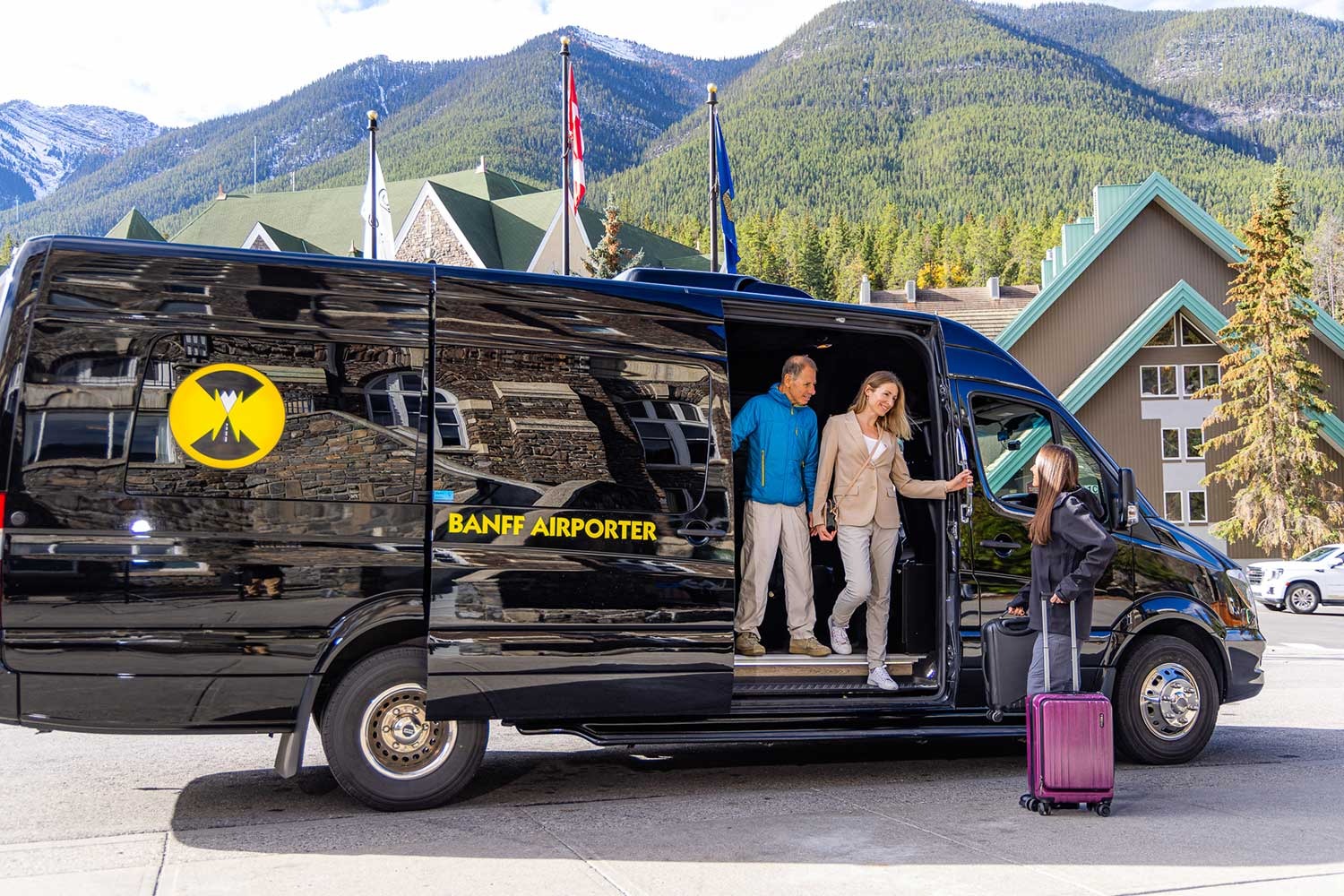
The challenge of winter operations in the Rockies isn't just inconvenient, it can be genuinely dangerous, and managing it requires the kind of real-time situational awareness that only good technology and experienced staff can provide.
Banff Airporter runs GPS tracking across its fleet, with live cameras on board each vehicle. The system functions much like a traffic map; green for clear, yellow for slow, dark red for serious delays, black for road closures. When conditions deteriorate, the team can see exactly where each bus is, how fast it's moving, and what conditions it's facing. That intelligence enables proactive decision-making: calling ahead to passengers, offering earlier departures, and routing buses onto alternative highways when the main route is compromised.
"I do know some other people that work for other companies and they don't have this," Aaron says. "When something happens on the highway, it's a guessing game. To have live cameras on board to see what the conditions are like, what speed they're going at, it definitely separates us from others."
But technology can only do so much. A few weeks before this conversation, Aaron was driving back from Calgary on his day off when conditions rapidly deteriorated. He found himself stopped on the highway for three hours, unable to move. Logging into the GPS system from his car, he could see two of his company's buses visible on the map a kilometre away, also stationary, coming from the opposite direction.
"Now you're talking about missed flights," he says. "We have about 48 people on board that aren't making your flight. And then when the highway reopens; is it safe to send drivers out?" It was, he notes, only the second time in the company's history that they cancelled runs entirely. With roughly 10 accidents on the road that day, there was no responsible alternative. The decision was made. No buses went out.
The response from passengers? Almost universally understanding. "I'd say 98% of people are understanding," Aaron says. "And then the other 2%, well, can't you take a helicopter to get to Calgary?"
There's also an unexpected business dimension to severe weather days. On days when the conditions are dangerous but not entirely impossible, Banff Airporter can see a 30% increase in bookings; locals who had planned to drive a friend to the airport deciding, understandably, that they'd rather leave it to the professionals.
How Technology Has Transformed the Customer Experience
Beyond the operational side, Aaron has watched technology reshape how customers interact with Banff Airporter entirely. The most striking shift: approximately 75% of all bookings are now made online, without any direct contact with the team.
"That's an amazing stat," he says. "We don't even hear from three quarters of our people. Our software must be reliable, that's a great sign for Zaui and what we have in place."
It wasn't always this way. Niall recalls the early days of online booking with some amusement:
"When we first got our booking online, it was total celebration. And even though a customer had booked online and had their receipt, they still phoned the night before to ask, 'Are you still going?'" The adoption curve was real but that hesitation is largely gone now.
The other major shift Aaron has seen is the move away from phone calls. Customers increasingly want to interact through chat quickly, asynchronously, on their own terms. Banff Airporter introduced a chatbot several years ago to handle the volume of basic questions that had historically clogged the phone lines.
The early version was imperfect. Answers were manually input, and edge cases would slip through a guest mentioning a 9pm arrival and the bot suggesting a 10am bus, failing to bridge the PM to AM distinction. Frustrating, and telling.
But the technology has matured significantly, particularly in the last six months. The bot now feeds directly off the Banff Airporter website, pulling information live rather than relying on static inputs. The result is a meaningfully more reliable customer experience and a shift in how the reservations team spends its time.
"We almost have someone on chatbot more than phone calls and emails," Aaron notes, "because people just want to strike up a conversation through a chat even though that question could have been answered on a phone in 10 seconds."
It's a reflection of something generational. The customers Banff Airporter is increasingly serving are comfortable with and often prefer text-based interaction. The business has had to move with that.
The AI Question: Opportunity, Anxiety, and the Case for Keeping it Human
No conversation about technology in 2025 can avoid the subject of artificial intelligence, and this one didn't either.
Aaron describes a business in active dialogue with itself about where AI fits. On one hand, the team has already been using AI tools to draft more professional emails and respond to guest communications more efficiently. On the other, there's a tension at the heart of the company's identity.
"Mark was like, 'We're not a robot. We're a company that you can speak to a human,'" Aaron recalls, describing an internal conversation about whether to adopt an AI phone agent. "But then we go back and forth, these are basic questions that an AI agent could answer. Are we going to have a job in six months? That's literally what people in the office are wondering."
It's a tension that resonates far beyond Banff. Across the transportation and hospitality industry, the question isn't whether AI is coming, it's how to integrate it in a way that enhances rather than erases the human relationship at the core of the business.
Niall is thoughtful about this from the Zaui side. "Customer centricity is where it's at. In the operations world, that type of journey requires personal interaction. There are too many moving parts, too many mission-critical elements that can't be left to an AI agent. We use the AI tools to enhance the human interaction that's probably the best way to frame it."
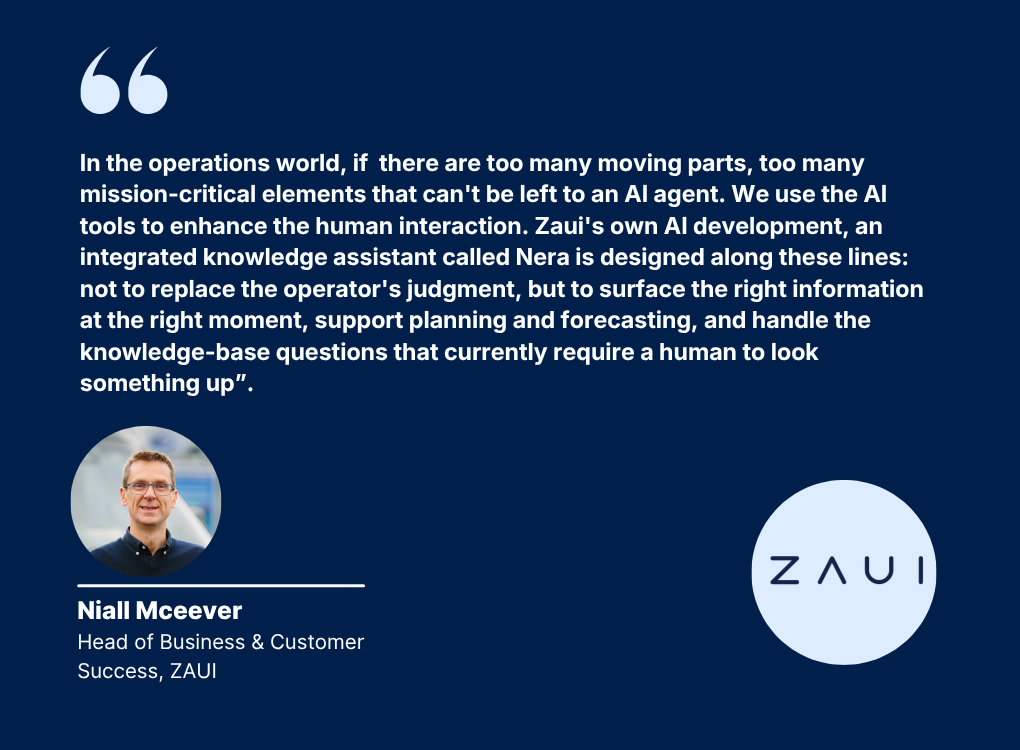
Zaui's own AI development, an integrated knowledge assistant called Nera is designed along these lines: not to replace the operator's judgment, but to surface the right information at the right moment, support planning and forecasting, and handle the knowledge-base questions that currently require a human to look something up.
What's Coming: Flight Integration, Smarter Reporting, and a Changing Tourism Landscape
When Niall asks Aaron about wish-list features, the things that would make the biggest operational difference, two answers come quickly.
The first is flight integration. Since the pandemic, flight schedules have shifted significantly, and some of Banff Airporter's historically busy runs are no longer aligned with major arrivals. Having a live feed of flight information and the ability to adjust scheduling and communications accordingly would be a meaningful operational upgrade.
The second is better reporting: accessible, real-time data on which runs are working, which aren't, and where occupancy patterns are shifting. "We've had the same schedule for 25 years," Aaron notes. "It's not broke, don't fix it. But does it work? If we changed everything to run every half hour, would we be busier?"
Both, as it happens, are already on Zaui's development roadmap for this year. The flight API integration is confirmed. The live reporting improvements are in progress, shaped in part by exactly the kind of conversations Niall describes having with operators like Aaron.
There's also a broader economic conversation happening in Alberta right now. Rising fuel prices and the tariff-related pressures affecting Canadian consumers and businesses may be changing travel behaviour in ways that benefit shuttle operators. At a recent town council meeting, the question of how Banff Lake Louise Tourism might promote bus travel over private car journeys was actively discussed.
"Will Banff actually be busier because Albertans stay in Alberta and don't drive out to Ontario?" Aaron wonders. "Will British Columbians still drive out this way? I don't know but there is an opportunity for us to be promoting the benefits of bus travel alongside the challenges of driving."
It's a point Niall echoes with conviction. "If you're in a car and you're in the traffic, you are the traffic. What we're trying to do is increase modal transport out of individual car use and into public transit."
Twenty-Five Years of Partnership: What It Actually Looks Like in Practice
The relationship between Banff Airporter and Zaui is, as Niall puts it, approaching a silver anniversary. It's one of the longest continuous partnerships in the company's portfolio and one that began, indirectly, before Niall even joined Zaui.
Running a shuttle operation in Ireland, he was looking for a platform that could take his business to the next level. He found Banff Airporter online, saw the platform they were using, and it led him directly to Zaui. "I knew from there that that was a system that my company required," he says. "I knew it was never about a transaction, it had to be a relationship."
That instinct has been borne out on both sides. Aaron describes the support they receive in terms that go well beyond standard software customer service. When a corporate client needed 1,000 individual promo codes, each unique, rather than a single shared code, the request went to Zaui's team in the morning. By the afternoon, they had all 1,000 codes, labelled sequentially.
"You're not going to get that support from other companies," Aaron says simply.
His advice for any shuttle or ground transportation operator evaluating software is direct:
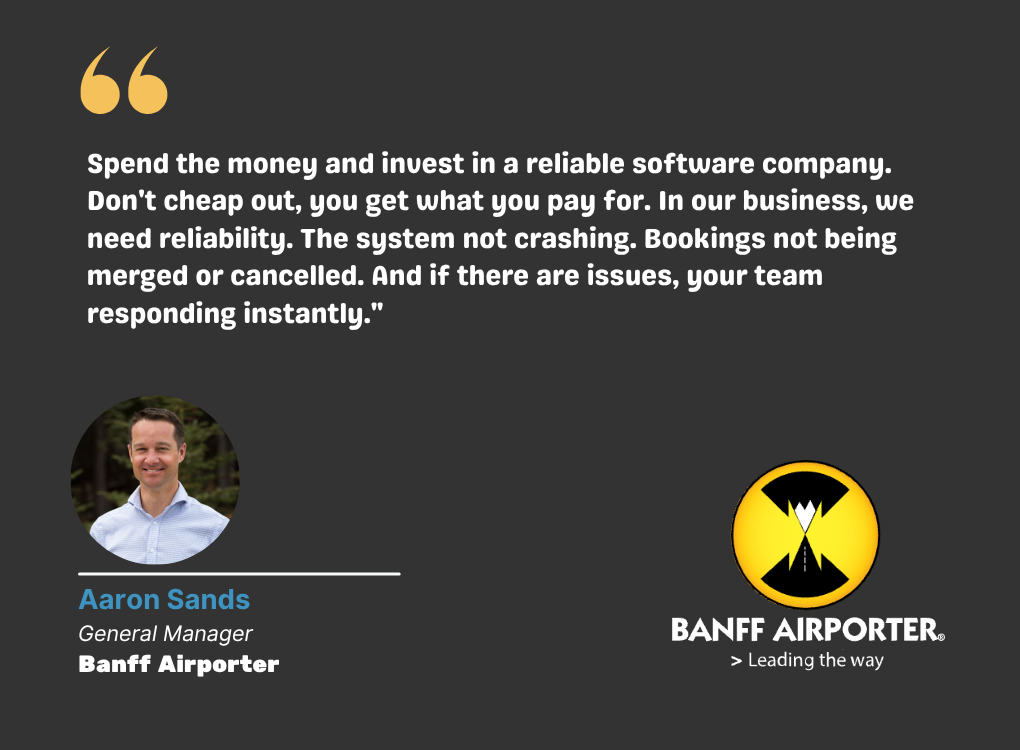
"Spend the money and invest in a reliable software company. Don't cheap out, you get what you pay for. In our business, we need reliability. The system not crashing. Bookings not being merged or cancelled. And if there are issues, your team responding instantly."
Final Thoughts: What It Takes to Last
At the end of the conversation, Niall reflects on what he's heard. "I see Banff Airporter as an operation delivered and run by the heart. There are a lot of people who come in and try to make a quick buck in this industry. That's why you're there over 20 years, Aaron. It's not for the faint-hearted."
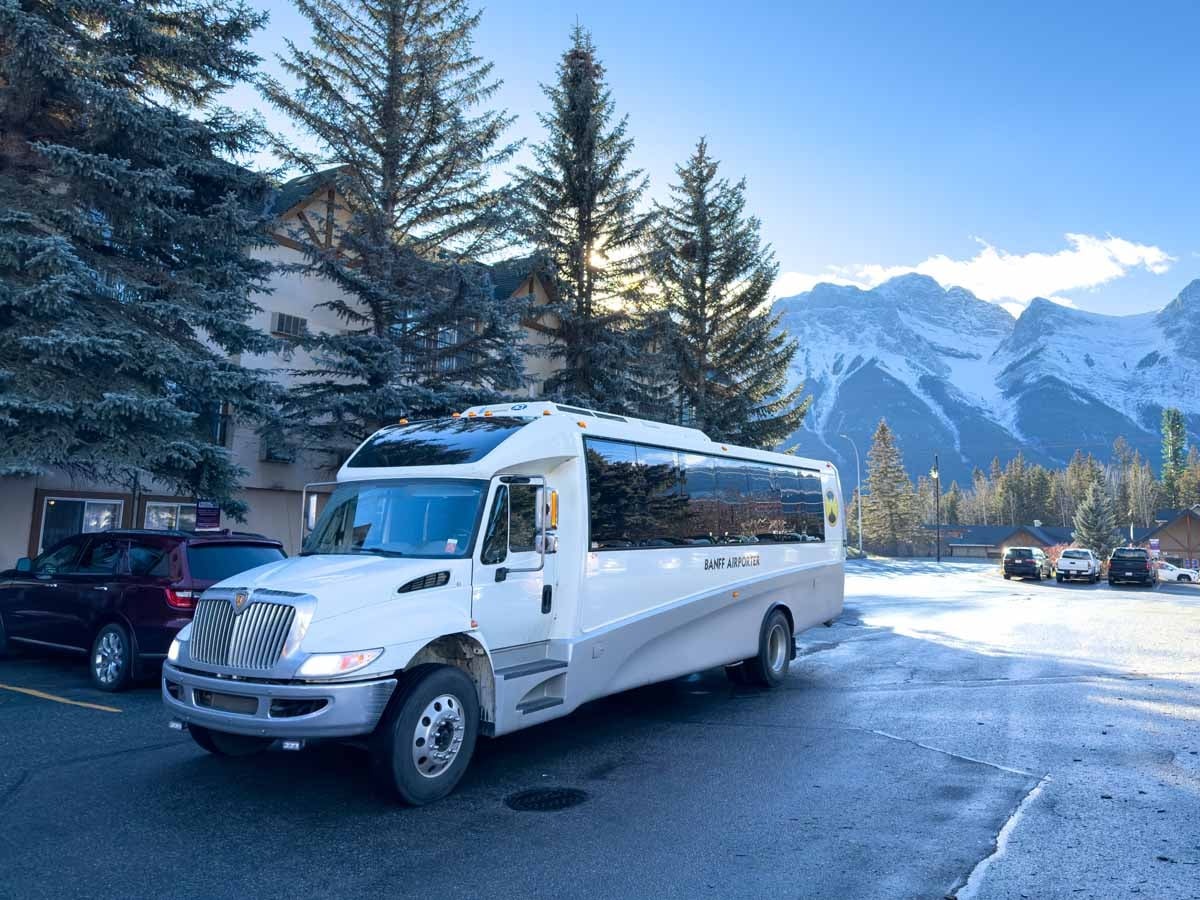
Outside, as they wrap up, 30 centimetres of snow are forecast for Banff. The buses will need to go out tomorrow. The team will be monitoring the GPS, watching road conditions, and proactively calling passengers. Some of those passengers will ask about taking a helicopter to Calgary. And Banff Airporter will, as it has for 25 years, figure it out.
Related Case Studies

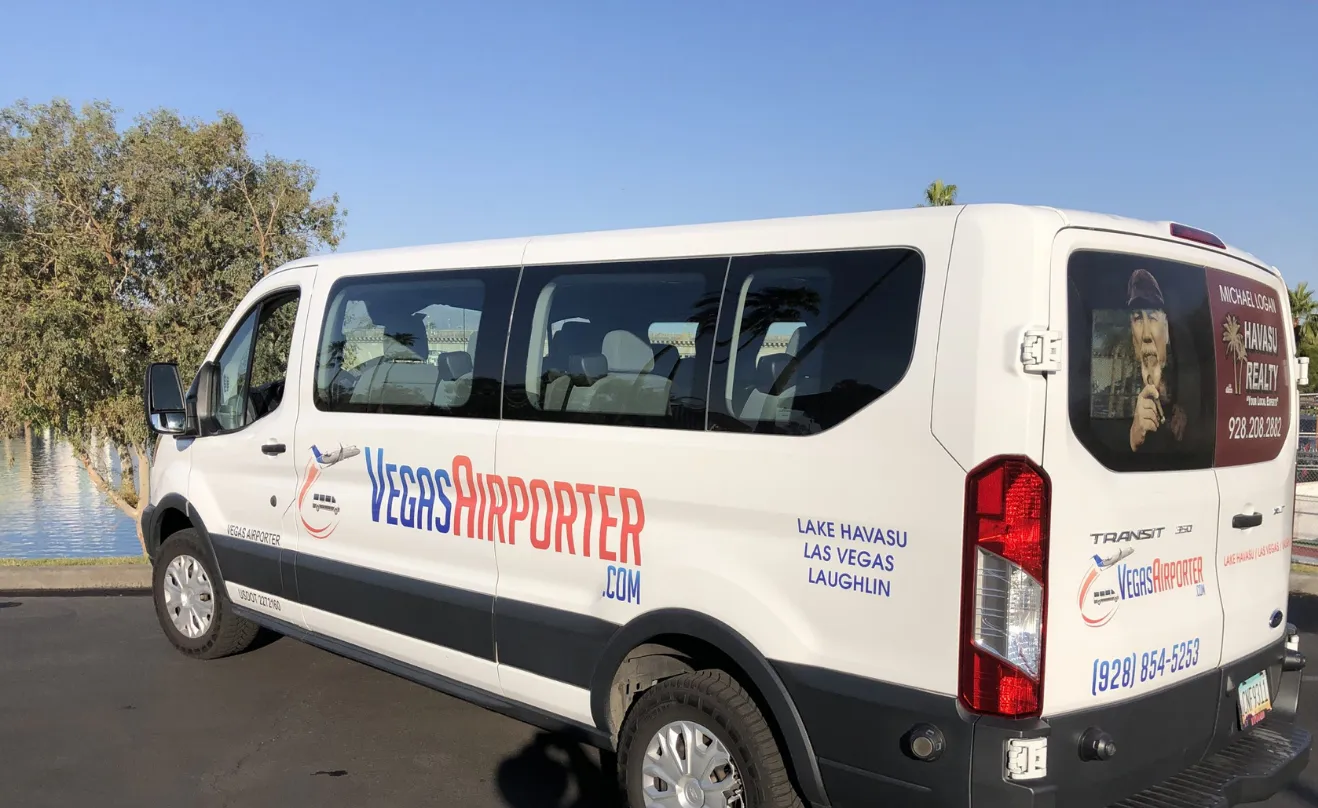
Case Study: Running Lean and Winning Big - How Vegas Airporter Revolutionizes Shuttle Services with Zaui
Learn how Vegas Airporter transformed their shuttle services using Zaui's shuttle scheduling software. Read this case study on running lean and winning with efficient software solutions.

Frequently Asked Questions
No. Zaui’s pricing is fully pay-as-you-go. You aren’t locked into any long-term contract. In fact, leading platforms emphasize this flexibility. Similarly, Zaui lets you start and stop anytime. You can change or cancel your plan freely, so you only pay for what you use.
Absolutely not. Zaui’s pricing is 100% transparent. We disclose all fees up front with no surprise add-ons or “sneak-in” charges. In fact, Zaui’s plans include all core features “without additional fees”. Industry experts note that hidden fees undermine trust so we avoid them entirely. All costs are clearly outlined in our pricing, and there are no extra setup charges or undisclosed surcharges at checkout.
Zaui integrates with major payment gateways (e.g. Stripe) so you only pay standard credit-card processing rates (roughly 1.9%+$0.30/transaction) and we don’t mark them up. Only the published platform commission is added on bookings. You also have full control over who pays the commission, we let you decide whether to absorb booking fees or pass them on to customers. In short, you’ll only pay the transparent booking commission and normal gateway fees, nothing extra.
Your onboarding and support are included in the price. We provide white-glove setup help and ongoing 24/7 support at no additional cost. Our dedicated customer-success team will guide you through every step, ensuring a smooth launch. You won’t pay extra for training or service other than the onboarding fee; it's all built into your plan.
You can schedule a free demo with our team. Our Zaui ninjas will walk you through pe how Zaui can work for your business and highlight opportunities to grow with our advanced features all without any upfront payment. This way, you can feel confident it’s the right fit before making a commitment.
Of course. Zaui’s plans are fully flexible. You can upgrade or downgrade at any time to match your needs, without penalties. You can move to a higher tier or back down easily, and your billing adjusts automatically.
No. Zaui does not charge its commission on offline/manual bookings. “No fees on offline bookings” You only pay the commission when a booking is processed online through our system. Manual reservations (or bookings from partner channels we set up for you) incur no extra platform fee. (30% or less)
All of Zaui’s core features are included in your plan at no extra charge. We believe in value and transparency: Zaui provides over 15 advanced features (Google Things to do, reporting tools, marketing tools, reports, etc.) at no additional cost. Many competitors charge extra or require higher plans for the same features, but with Zaui you get the full suite of tools in one package. Any optional add-ons (if any) will always be clearly listed and optional there are no surprise paid upgrades for standard features.
Each Zaui plan is designed for clarity and fairness, following industry best practices. You can trust that our pricing is transparent and flexible, with the support you need built in.
Extra accounts- unlimited agents, resellers, user
