

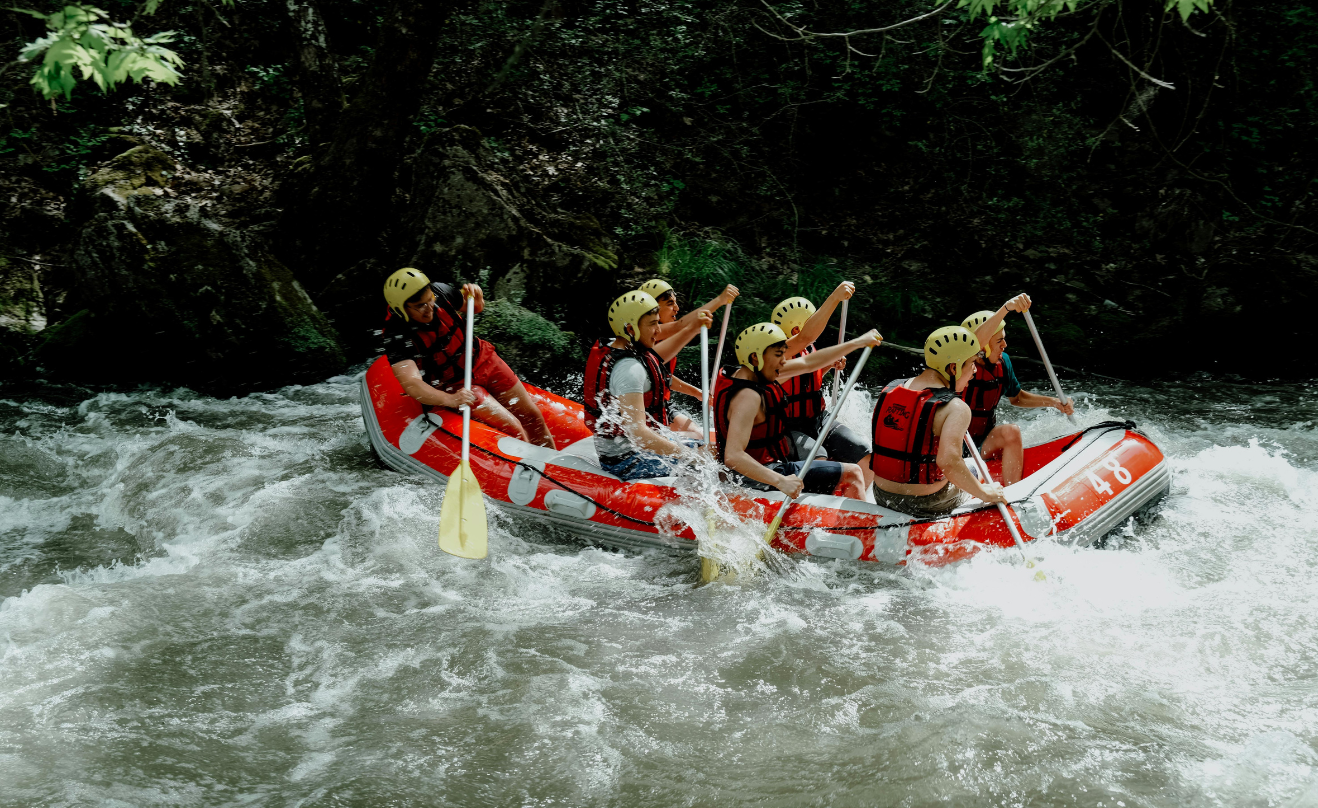

What Is Adventure Tourism? Trends, Types, and What Operators Need to Know
Adventure tourism has become one of the fastest-growing segments of the global travel industry. It encompasses a wide range of activities, from whitewater rafting and backcountry skiing to wildlife safaris and volcano hiking, unified by the element of physical activity, natural environments, and some degree of challenge or risk. For operators running these kinds of experiences, understanding the category you are operating in, its growth drivers, its customer profile, and its operational requirements, matters both for how you run your business and how you market it.
How Adventure Tourism Is Defined
The Adventure Travel Trade Association defines adventure tourism as travel that includes at least two of three elements: a physical activity, a natural environment, and a cultural exchange or interaction. By that definition, a guided kayak trip through the Gulf Islands qualifies. So does a safari in Kenya, a multi-day backcountry ski traverse in the Coast Mountains, or a cycling tour through Tuscany.
The breadth of that definition matters for operators. Adventure tourism is not a niche category. It describes a huge range of experiences, from soft adventure activities accessible to most adults with no prior experience, like guided nature hikes, snorkeling tours, and beginner paddling trips, to hard adventure experiences that require physical fitness and specialized skills, like technical climbing, big-wave surfing, and high-altitude trekking.
Operators in this space often run products across both ends of this spectrum, using soft adventure offerings to build volume and accessibility while hard adventure products serve a more specialist, higher-spending customer segment.
Why Adventure Tourism Is Growing
Several intersecting trends are driving sustained growth in adventure tourism, and operators who understand them can position their products more effectively in both marketing and product development.
Travelers are prioritizing experiences over material goods at a rate that has been accelerating for more than a decade. The post-pandemic period amplified this further: extended periods of restricted movement increased the perceived value of active, outdoor experiences, and that shift in consumer attitude has persisted.
Demographics are also a factor. Older travelers, particularly those in the 45 to 65 age bracket, are more active and have more disposable income than previous generations at the same life stage. This cohort is driving growth in accessible adventure offerings: guided experiences that deliver an element of physical engagement and outdoor immersion without requiring the fitness levels or technical skills of hard adventure products.
Growing awareness of wellness and its connection to time outdoors is another driver. Travelers increasingly seek experiences that combine physical activity, natural environment, and a sense of achievement. A guided glacier hike, a sea kayaking expedition, or a multi-day cycling tour serves these needs simultaneously.
Adventure Tourism Customer Profiles
Understanding who books adventure tourism experiences helps operators design products, set price points, and target marketing more precisely.
Soft adventure customers tend to be first-time participants in the activity type, often traveling in couples or small groups, motivated by novelty and the desire for a guided, safe version of an activity they could not do independently. They have moderate to high disposable income, are willing to pay for quality, and weight reviews and professional guidance heavily in their booking decision.
Hard adventure customers are typically experienced, often repeat participants in the activity, and are purchasing for the quality of the specific challenge or route rather than the novelty of the experience category. They research extensively, pay attention to guide credentials and safety protocols, and are willing to pay premium rates for exceptional access, conditions, or expertise.
Both profiles value authenticity. Experiences that feel staged or over-produced lose credibility with adventure travelers faster than with almost any other tourism segment. The most effective marketing for adventure tourism products is honest, specific content about what the experience actually involves: the terrain, the conditions, the physical requirements, and what makes your particular version of it worth choosing.
Operational Requirements That Set Adventure Tourism Apart
Running adventure tourism experiences has operational complexity that standard sightseeing or transport operations do not. Safety protocols, guide qualifications, equipment management, liability waivers, and weather-dependent cancellation policies all require systems that can handle this complexity at scale.
Resource management is particularly demanding. A kayak tour operation needs to manage vessels, paddles, personal flotation devices, and spray skirts across multiple departure times, with seasonal variation in which equipment types are appropriate. A backcountry skiing operation manages guides, equipment rentals, beacon and safety gear, and transport to trailheads. These are not simple resource pools; they are interconnected systems where one item being unavailable can ground an entire departure.
Zaui's scheduling and resource assignment tools give operators real-time visibility over all resources, with the ability to share equipment across multiple products without overbooking any individual item. That level of resource management is what separates a booking system built for this sector from a generic appointment scheduling tool.
Weather-dependent cancellation policies require flexibility that most basic booking systems cannot provide. Adventure tourism operators need cancellation rules that distinguish between operator-initiated cancellations (due to unsafe conditions) and guest-initiated cancellations (due to preference), with different refund structures for each. Zaui's Booking Policy Toolkit gives operators the ability to configure tiered refund structures, operator-initiated cancellation handling, and an optional Flex Policy that guests can purchase to protect their booking against weather-related cancellations.
Marketing Adventure Tourism Experiences Effectively
Adventure tourism marketing works best when it leads with specificity and honesty rather than generic aspirational language. Every adventure tourism brand uses words like "unforgettable" and "once in a lifetime." The operators who stand out are the ones who describe their specific experience in enough concrete detail that a potential guest can genuinely imagine themselves on it.
Content that converts in adventure tourism includes detailed trip descriptions with honest information about physical requirements, what-to-expect guides that describe conditions in different seasons, guide profiles that establish credibility and expertise, and real guest photography and video that shows the experience in authentic conditions rather than ideal ones.
SEO for adventure tourism operators follows the same principles as SEO for any tour operator: specificity wins. "Kayak tours" is a generic term dominated by aggregators. "Half-day guided kayak tour Johnstone Strait orca season" targets the specific search of a specific customer who is ready to book.
For a detailed breakdown of search marketing for operators, see SEO for Tour Operators: How to Rank on Google and Get Direct Bookings.
Pricing Adventure Tourism Experiences
Adventure tourism experiences command a price premium over standard sightseeing tours because they deliver a combination of expert guidance, safety management, equipment provision, and a physically engaging experience that generic tourism products do not. That premium is real, and operators should not undermine it by pricing competitively against experiences that are not genuinely comparable.
The customers who book hard adventure experiences are particularly price-insensitive on quality signals. Guide credentials, safety protocols, equipment standards, and group size limits matter more to them than the absolute price. An operator who leads on these signals and prices accordingly will attract the right customer and protect margin simultaneously.
Dynamic pricing rules that reflect demand patterns, day-of-week, and lead time are as applicable to adventure tourism as to any other experience category. Zaui's dynamic pricing toolkit allows operators to build these rules into their booking system so prices adjust automatically rather than requiring manual updates each season.
Distribution for Adventure Tourism Operators
The OTA landscape for adventure tourism has specific players worth knowing. Viator and GetYourGuide dominate the general experience category, and both have significant adventure tourism inventory. Specialized platforms for specific activity categories, climbing, diving, skiing, cycling, also carry relevant listings for operators whose products fit those niches.
The same channel management principles apply: list on the OTAs that reach your target customer, synchronize inventory in real time, build the direct channels in parallel, and invest in the post-trip relationship that converts first-time OTA bookers into direct customers over time.
Zaui's OTA management tools and channel manager handle the synchronization, and the agent and reseller portal supports trade partnerships with hotels, incoming agencies, and destination management companies that refer adventure travelers to specialist operators.
Further Reading From Zaui
Related Posts

Frequently Asked Questions
No. Zaui’s pricing is fully pay-as-you-go. You aren’t locked into any long-term contract. In fact, leading platforms emphasize this flexibility. Similarly, Zaui lets you start and stop anytime. You can change or cancel your plan freely, so you only pay for what you use.
Absolutely not. Zaui’s pricing is 100% transparent. We disclose all fees up front with no surprise add-ons or “sneak-in” charges. In fact, Zaui’s plans include all core features “without additional fees”. Industry experts note that hidden fees undermine trust so we avoid them entirely. All costs are clearly outlined in our pricing, and there are no extra setup charges or undisclosed surcharges at checkout.
Zaui integrates with major payment gateways (e.g. Stripe) so you only pay standard credit-card processing rates (roughly 1.9%+$0.30/transaction) and we don’t mark them up. Only the published platform commission is added on bookings. You also have full control over who pays the commission, we let you decide whether to absorb booking fees or pass them on to customers. In short, you’ll only pay the transparent booking commission and normal gateway fees, nothing extra.
Your onboarding and support are included in the price. We provide white-glove setup help and ongoing 24/7 support at no additional cost. Our dedicated customer-success team will guide you through every step, ensuring a smooth launch. You won’t pay extra for training or service other than the onboarding fee; it's all built into your plan.
You can schedule a free demo with our team. Our Zaui ninjas will walk you through pe how Zaui can work for your business and highlight opportunities to grow with our advanced features all without any upfront payment. This way, you can feel confident it’s the right fit before making a commitment.
Of course. Zaui’s plans are fully flexible. You can upgrade or downgrade at any time to match your needs, without penalties. You can move to a higher tier or back down easily, and your billing adjusts automatically.
No. Zaui does not charge its commission on offline/manual bookings. “No fees on offline bookings” You only pay the commission when a booking is processed online through our system. Manual reservations (or bookings from partner channels we set up for you) incur no extra platform fee. (30% or less)
All of Zaui’s core features are included in your plan at no extra charge. We believe in value and transparency: Zaui provides over 15 advanced features (Google Things to do, reporting tools, marketing tools, reports, etc.) at no additional cost. Many competitors charge extra or require higher plans for the same features, but with Zaui you get the full suite of tools in one package. Any optional add-ons (if any) will always be clearly listed and optional there are no surprise paid upgrades for standard features.
Each Zaui plan is designed for clarity and fairness, following industry best practices. You can trust that our pricing is transparent and flexible, with the support you need built in.
Extra accounts- unlimited agents, resellers, user
