

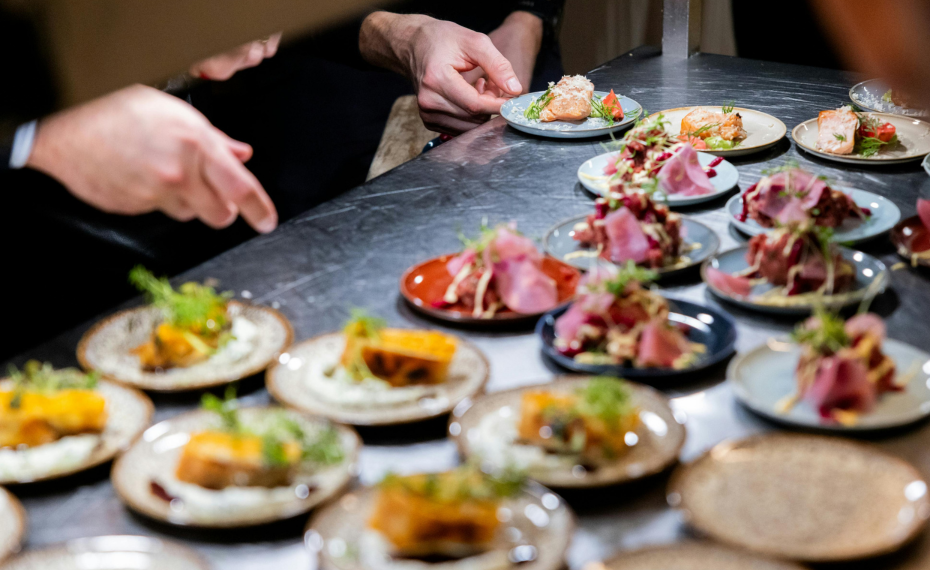

Culinary Tourism: What It Is, Why It Is Growing, and How Operators Can Capitalize
Food has become one of the primary reasons people travel. Not just as sustenance alongside other activities, but as the destination itself. A guest who plans a trip to the Okanagan primarily to visit wineries and farm-to-table restaurants is a culinary tourist. So is a traveller who signs up for a market tour and cooking class in Oaxaca, or one who books a guided ramen crawl through Tokyo's Shinjuku ward.
For tour and experience operators, culinary tourism represents a category with strong and growing demand, relatively low competitive density compared to standard sightseeing, and guests who tend to be high-spending, highly engaged, and very likely to share their experience online. This guide covers what culinary tourism actually involves, who the customers are, and how operators can build and market culinary experiences effectively.
How Culinary Tourism Is Defined
The World Food Travel Association defines culinary tourism as the pursuit of unique and memorable eating and drinking experiences. That definition is intentionally broad. It encompasses structured culinary tours (guided visits to producers, markets, restaurants, or cellars), hands-on experiences (cooking classes, harvesting, fermentation workshops), and destination dining (booking a trip specifically to eat at a particular restaurant or in a particular food region).
For operators, this breadth means that culinary tourism is not limited to wine country or fine dining. A guided street food tour in Vancouver's Richmond district, a dungeness crab fishing experience with a traditional preparation afterward, or a First Nations food sovereignty experience that connects visitors to indigenous foodways and harvesting practices are all culinary tourism experiences. The defining element is that food and drink are central to the experience, not incidental to it.
Why Culinary Tourism Is Growing
Several reinforcing trends are driving culinary tourism's expansion, and they are not short-term.
The experience economy, the broad consumer shift from spending on goods toward spending on meaningful experiences, is well established and continuing. Food experiences sit at an intersection of that trend with social sharing: a remarkable meal, a winery tour, a hands-on cooking class generates Instagram content naturally. The experience and the documentation of it are bundled together in a way that suits how modern travelers think about their trips.
Growing interest in food provenance and sustainability is also a driver. Travelers who care about where their food comes from and how it is produced are drawn to farm visits, producer tours, and harvest experiences that give them direct access to that story. This cohort skews toward higher spending and is more loyal to operators who can deliver on the authenticity their interest demands.
Regional food identity is becoming a more prominent part of destination marketing. Tourism boards in British Columbia, Quebec, the Maritimes, and elsewhere are increasingly promoting food and drink as a primary draw rather than a supporting feature. Operators who position themselves within that narrative benefit from the destination marketing investment that surrounds it.
The Culinary Tourism Customer
Understanding who books culinary tourism experiences helps operators design products, set price points, and target their marketing more precisely.
Culinary tourists tend to be older than the adventure tourism demographic, typically 35 and above, with a higher household income and a stronger preference for guided, contextual experiences over self-directed exploration. They are more likely to be traveling as a couple or in a small group of friends than with children, and they weight the depth of the experience, the credentials and personality of the guide or host, and the quality of the products they will taste very highly in their booking decision.
They are also voracious reviewers. A great culinary experience generates detailed, enthusiastic TripAdvisor and Google reviews at a higher rate than most other experience categories. This makes reputation management and review generation particularly important for culinary operators, because word of mouth and social proof drive a disproportionate share of new bookings in this category.
Building a Culinary Tourism Experience
The elements that make a culinary tourism experience worth booking come down to three things: access, story, and craft.
Access means giving guests entry to something they cannot get on their own. A behind-the-scenes winery tour that goes into the barrel room, a fisherman's breakfast that starts at 5am on the boat, a private market tour with a chef who knows every vendor personally. The access does not need to be genuinely exclusive, but it needs to feel meaningful.
Story means context. A guest who tastes a wine without understanding the terroir, the vintage, and the decisions the winemaker made has had a pleasant drink. A guest who understands all of those things has had an experience. The guide or host who can tell that story, connect it to the landscape and the season and the people who made the product, is the central element of what makes a culinary experience worth what you charge for it.
Craft means quality of execution. The food and drink served in a culinary experience needs to be genuinely excellent, not merely competent. Guests who book culinary experiences have high expectations for product quality, and meeting those expectations requires relationships with producers and suppliers who share your standards.
Pricing Culinary Experiences
Culinary tourism experiences can and should be priced at a premium to standard sightseeing tours of similar duration. The guest is paying for access, story, and craft, not just transport and narration. A three-hour guided market and cooking class that delivers all three elements at high quality can command a significantly higher price per person than a three-hour city bus tour.
Demand-based pricing is as applicable to culinary experiences as to any other tour category. Peak season departures, especially those tied to harvest timing, festival periods, or high-traffic tourist weeks, should carry premium pricing. Zaui's dynamic pricing toolkit lets operators build these rules into their booking system so prices adjust automatically rather than requiring seasonal manual updates.
Marketing Culinary Tourism Experiences
The marketing for culinary tourism leans heavily on photography and video that shows the actual quality of what guests will experience. Images of the food, the setting, the host, and real guests in the moment of discovery or enjoyment carry more weight than any written description. If your culinary experience is genuinely exceptional, the visual content will do more than any other marketing asset.
SEO for culinary tourism operators follows the same principles as broader tour operator SEO: specificity wins. "Wine tours" as a keyword is dominated by aggregators and OTAs. "Guided winery tour Okanagan Valley with harvest experience September" targets the specific search of a specific guest who is ready to book in your destination.
Partner relationships with accommodation providers, concierge networks, and destination marketing organizations are particularly productive for culinary operators. Hotel concierges who have personally experienced your tour, or who have strong peer recommendations for it, will recommend it regularly. The high guest satisfaction rates that characterize well-executed culinary experiences translate directly into strong word-of-mouth referrals through these networks.
Managing Culinary Tourism Operations
Culinary tourism experiences have operational considerations that differ from standard sightseeing: small group sizes, premium timing requirements (a harvest experience runs when the harvest runs), ingredient sourcing, and guide or host relationships that are central to the product quality.
Small group sizes mean that capacity management and cancellation policies are more consequential than for large-group experiences. A no-show on a 12-person cooking class leaves a meaningful gap in revenue. A clear, tiered cancellation policy with appropriate fees for late cancellations protects the operator without creating guest resentment. Zaui's Booking Policy Toolkit gives operators the ability to configure exactly these structures, with activity-specific overrides and an optional guest-purchased Flex Policy for weather or circumstance-dependent cancellations.
For operators building out a culinary tourism offering alongside existing tours or transport services, Zaui's centralized platform handles both product types from a single system, keeping resource management, availability, OTA connectivity, and guest communications unified. Book a free demo to see how it applies to your specific product mix.
Further Reading From Zaui
Related Posts

Upgrade Your Journey: Zaui Introduces Exciting New Features to its Transport Booking System
Learn all you need to know about the efficient and reliable transport booking system, including the latest enhancements introduced by Zaui.

Tour Operator Business Plan: What to Include and How to Build One That Works
A practical guide to writing a tour operator business plan. What to include in each section, the most common mistakes operators make, and how to make it a useful tool rather than a one-time document.

Frequently Asked Questions
No. Zaui’s pricing is fully pay-as-you-go. You aren’t locked into any long-term contract. In fact, leading platforms emphasize this flexibility. Similarly, Zaui lets you start and stop anytime. You can change or cancel your plan freely, so you only pay for what you use.
Absolutely not. Zaui’s pricing is 100% transparent. We disclose all fees up front with no surprise add-ons or “sneak-in” charges. In fact, Zaui’s plans include all core features “without additional fees”. Industry experts note that hidden fees undermine trust so we avoid them entirely. All costs are clearly outlined in our pricing, and there are no extra setup charges or undisclosed surcharges at checkout.
Zaui integrates with major payment gateways (e.g. Stripe) so you only pay standard credit-card processing rates (roughly 1.9%+$0.30/transaction) and we don’t mark them up. Only the published platform commission is added on bookings. You also have full control over who pays the commission, we let you decide whether to absorb booking fees or pass them on to customers. In short, you’ll only pay the transparent booking commission and normal gateway fees, nothing extra.
Your onboarding and support are included in the price. We provide white-glove setup help and ongoing 24/7 support at no additional cost. Our dedicated customer-success team will guide you through every step, ensuring a smooth launch. You won’t pay extra for training or service other than the onboarding fee; it's all built into your plan.
You can schedule a free demo with our team. Our Zaui ninjas will walk you through pe how Zaui can work for your business and highlight opportunities to grow with our advanced features all without any upfront payment. This way, you can feel confident it’s the right fit before making a commitment.
Of course. Zaui’s plans are fully flexible. You can upgrade or downgrade at any time to match your needs, without penalties. You can move to a higher tier or back down easily, and your billing adjusts automatically.
No. Zaui does not charge its commission on offline/manual bookings. “No fees on offline bookings” You only pay the commission when a booking is processed online through our system. Manual reservations (or bookings from partner channels we set up for you) incur no extra platform fee. (30% or less)
All of Zaui’s core features are included in your plan at no extra charge. We believe in value and transparency: Zaui provides over 15 advanced features (Google Things to do, reporting tools, marketing tools, reports, etc.) at no additional cost. Many competitors charge extra or require higher plans for the same features, but with Zaui you get the full suite of tools in one package. Any optional add-ons (if any) will always be clearly listed and optional there are no surprise paid upgrades for standard features.
Each Zaui plan is designed for clarity and fairness, following industry best practices. You can trust that our pricing is transparent and flexible, with the support you need built in.
Extra accounts- unlimited agents, resellers, user
