


OTA Marketing for Tour Operators: How to Use Aggregators Without Losing Control of Your Business
Viator, GetYourGuide, Expedia, Booking.com: for most tour and transport operators, these platforms are both the most reliable source of new bookings and the most expensive. OTA commissions typically run between 20 and 30 percent per booking. At scale, that is a significant portion of revenue that never reaches your business.
The challenge is that OTAs are not optional in the current discovery landscape. Travelers use them. The question is not whether to be on them but how to use them strategically so they grow your business rather than just extracting margin from it.
How OTAs Actually Work as Marketing Channels
Most operators think of OTAs as booking channels. They are also, and importantly, marketing channels. When a guest books you through Viator for the first time, Viator did the marketing. They surfaced your listing to someone who did not know you existed, convinced that person your tour was worth their time and money, and delivered a paying customer. You paid 20 to 25 percent for that service.
That framing matters because it changes how you evaluate the relationship. The question to ask is not "how do I avoid OTAs" but "what is the most efficient way to acquire a new customer, and how do I ensure that customer books directly next time?"
A guest acquired through Viator at 25 percent commission who then books directly on repeat is a profitable long-term customer. The first booking is expensive. The second and third bookings are nearly pure margin. Operators who think in these terms invest in the handoff from OTA discovery to direct relationship.
Building OTA Listings That Actually Drive Traffic
Not all OTA listings perform equally. The platforms use ranking algorithms that favor listings with specific characteristics, and operators who understand those signals can position themselves significantly better than competitors with equivalent products.
High-quality photography is the single highest-return investment in an OTA listing. Guests make snap judgments based on images before they read a word of description. Professional photos that show the actual experience, real guests in real conditions, not stock photography or empty boats, outperform lower-quality imagery consistently in both click rate and conversion rate.
Review volume and recency matter significantly to OTA ranking algorithms. A listing with 300 reviews that includes recent submissions ranks better than one with 300 older reviews and no new activity. Building a post-trip email sequence that consistently drives review submissions to your OTA listing is one of the most direct ways to improve your ranking position. Zaui's automated guest communication can trigger these review requests automatically at a set interval after each departure.
Pricing competitiveness affects both ranking and conversion. OTAs surface lower-priced options preferentially in many contexts. If your pricing is consistently above comparable experiences in your category, your listing will be deprioritized. This does not mean you need to race to the bottom, but your pricing needs to be justifiable within the context of what the OTA is showing potential guests alongside your listing.
Response rate and response time affect your listing health on most major OTA platforms. Guests send inquiries, and operators who respond quickly and consistently are rewarded with better visibility. If your team cannot maintain response times, some platforms allow automated responses to common inquiries. Check each platform's policies before implementing automation.
OTA Commission Rates: What You Are Actually Paying
OTA commission structures vary by platform, region, and volume, and they are not always presented transparently. Understanding your actual commission rate, and the total cost per booking once payment processing fees and any performance bonuses are factored in, is essential for evaluating whether each channel is earning its place in your distribution mix.
Viator and GetYourGuide typically operate on commission models that range from 20 to 30 percent of the booking value. Booking.com's commission structure for experiences varies. Some platforms offer tiered commission structures where operators who commit to preferential pricing or exclusivity on certain products receive a lower commission rate in return.
The comparison that matters is cost per acquisition: the total amount you pay to generate one booked guest through each channel. A 25 percent OTA commission on a $150 tour is $37.50 per booking. A Google Ad that generates a direct booking at a $15 cost per click with a 3 percent conversion rate costs approximately $500 per booking. In that comparison, the OTA is by far the more efficient acquisition channel, even at 25 percent commission. In other markets and product types, the math looks different.
Run the numbers for your specific product mix and channels before assuming that reducing OTA bookings in favor of paid search will improve your margin. The goal is the best cost per acquisition across your entire channel mix, not the elimination of any particular channel.
Reducing OTA Dependence Over Time
The path to lower OTA dependence runs through direct marketing investment, not through walking away from OTA channels. Operators who pull back from OTAs before they have equivalent direct booking volume simply reduce their total bookings and revenue.
The strategy that works is parallel investment: maintain strong OTA listings while simultaneously building the direct channels that will carry more of the load over time. Email list building, SEO content, Google Business Profile optimization, and a direct booking website that converts well are the primary levers.
The handoff from OTA booking to direct relationship is the critical mechanism. Every guest who books through an OTA should receive communications that connect them to your brand directly, not just the OTA's confirmation email. A post-trip communication from your brand, with a direct booking link for their next visit, is the beginning of that relationship transfer. Zaui's automated guest communication handles this sequence automatically for every departure.
Managing Multiple OTAs Without Losing Control of Inventory
The operational risk of distributing across multiple OTAs simultaneously is double-booking: the same seat sold twice because inventory did not update fast enough across channels. For high-volume operators running back-to-back departures with limited capacity, a double-booking is not just an embarrassment. It is a customer service crisis and a reputation risk.
The solution is a booking system with real-time channel synchronization. When a booking comes in through any channel, inventory should update across every other channel within seconds. Delayed updates, even by a few minutes, create double-booking risk at high volumes.
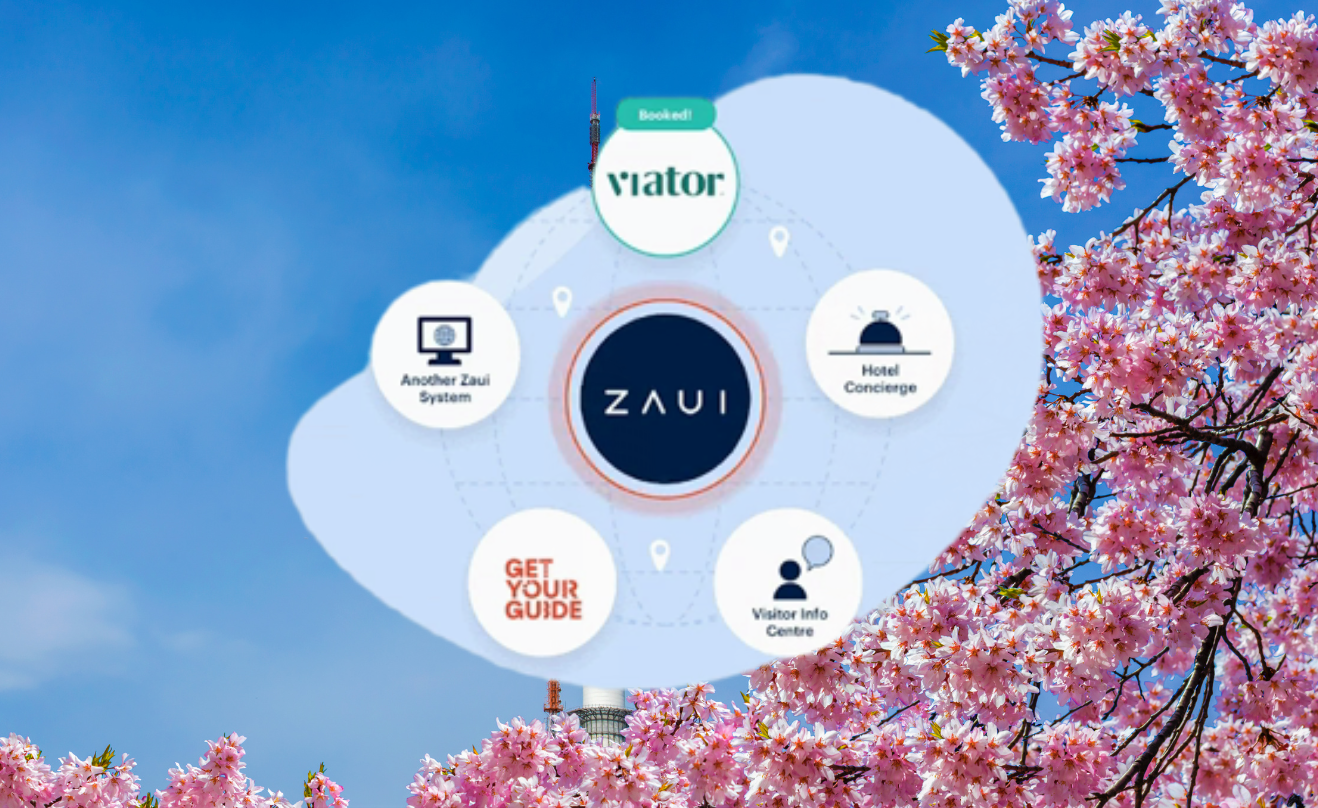
Zaui's OTA management tools and channel manager synchronize availability across connected OTAs in real time, consolidating all incoming bookings into a single dashboard. You see all bookings regardless of which channel they came from, your capacity is always accurate across every surface, and the operational risk of distributing through multiple platforms is eliminated.
Which OTAs Are Worth Your Time
The right OTA mix depends on your product type, destination, and customer demographics. Viator and GetYourGuide have the largest global reach for tours and activities. Booking.com's experience product is growing. Expedia's activity offerings are significant in the North American market. Google Things to Do is not technically an OTA but functions similarly for discovery purposes.
Zaui's Google Things to Do integration connects your inventory directly to Google's activity discovery surface, which is increasingly prominent in travel-related searches. This is distinct from an OTA relationship in that Google does not take commission on bookings in the same way, making it one of the higher-margin discovery channels available to operators who connect their inventory to it.
For operators running ground transportation alongside tours, Booking.com's ground transport inventory and airport shuttle directories represent additional channels that standard tour-focused OTAs do not cover. Zaui's channel management infrastructure supports both categories.
OTA Marketing as Part of a Broader Strategy
OTA marketing works best as one layer in a multi-channel strategy, not as the entirety of a distribution approach. The operators who grow profitably over time use OTAs to fill capacity and drive discovery, SEO and content to build organic direct traffic, email and direct marketing to retain past guests, and a booking system that gives them visibility across every channel from one place.
That combination, executed consistently, shifts the channel mix over time toward higher-margin direct bookings while maintaining the total booking volume that OTAs provide in the short term.
Book a free Zaui demo to see how the channel manager and OTA tools work for your specific distribution setup.
Further Reading From Zaui
Related Posts

Frequently Asked Questions
No. Zaui’s pricing is fully pay-as-you-go. You aren’t locked into any long-term contract. In fact, leading platforms emphasize this flexibility. Similarly, Zaui lets you start and stop anytime. You can change or cancel your plan freely, so you only pay for what you use.
Absolutely not. Zaui’s pricing is 100% transparent. We disclose all fees up front with no surprise add-ons or “sneak-in” charges. In fact, Zaui’s plans include all core features “without additional fees”. Industry experts note that hidden fees undermine trust so we avoid them entirely. All costs are clearly outlined in our pricing, and there are no extra setup charges or undisclosed surcharges at checkout.
Zaui integrates with major payment gateways (e.g. Stripe) so you only pay standard credit-card processing rates (roughly 1.9%+$0.30/transaction) and we don’t mark them up. Only the published platform commission is added on bookings. You also have full control over who pays the commission, we let you decide whether to absorb booking fees or pass them on to customers. In short, you’ll only pay the transparent booking commission and normal gateway fees, nothing extra.
Your onboarding and support are included in the price. We provide white-glove setup help and ongoing 24/7 support at no additional cost. Our dedicated customer-success team will guide you through every step, ensuring a smooth launch. You won’t pay extra for training or service other than the onboarding fee; it's all built into your plan.
You can schedule a free demo with our team. Our Zaui ninjas will walk you through pe how Zaui can work for your business and highlight opportunities to grow with our advanced features all without any upfront payment. This way, you can feel confident it’s the right fit before making a commitment.
Of course. Zaui’s plans are fully flexible. You can upgrade or downgrade at any time to match your needs, without penalties. You can move to a higher tier or back down easily, and your billing adjusts automatically.
No. Zaui does not charge its commission on offline/manual bookings. “No fees on offline bookings” You only pay the commission when a booking is processed online through our system. Manual reservations (or bookings from partner channels we set up for you) incur no extra platform fee. (30% or less)
All of Zaui’s core features are included in your plan at no extra charge. We believe in value and transparency: Zaui provides over 15 advanced features (Google Things to do, reporting tools, marketing tools, reports, etc.) at no additional cost. Many competitors charge extra or require higher plans for the same features, but with Zaui you get the full suite of tools in one package. Any optional add-ons (if any) will always be clearly listed and optional there are no surprise paid upgrades for standard features.
Each Zaui plan is designed for clarity and fairness, following industry best practices. You can trust that our pricing is transparent and flexible, with the support you need built in.
Extra accounts- unlimited agents, resellers, user
