

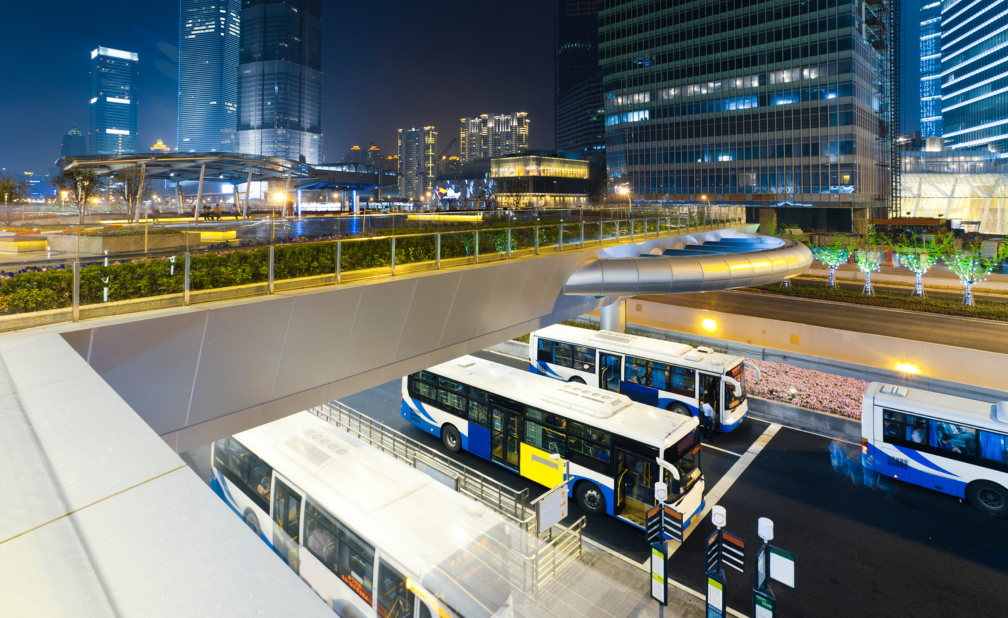

11 Benefits of Centralized Reservations for Fleets
Running a multi-vehicle tour or shuttle operation means managing more moving parts than most software was ever designed to handle. You have vans, mini-coaches, and full-size motorcoaches out on different routes simultaneously. You have bookings pouring in from your website, from Viator, from GetYourGuide, from Expedia, from walk-up customers at the dock or depot, all at the same time. And somewhere, a dispatcher is still updating a whiteboard while a driver is waiting on a radio call.
The cracks show up fast. A double-booking on a sold-out shuttle. A printed manifest that's already out of date before the van leaves the yard. A no-show rate hovering around 10% because nobody sent a reminder. Hours spent logging into OTA extranets separately every morning. According to the Arival Global Operator Landscape survey of more than 7,000 operators, roughly 40% of tour and activity businesses worldwide still lack a modern reservation system, and the operators paying that price feel it every single day.
Centralized reservation management is how you fix all of it from one place. This guide walks through 11 concrete, outcome-driven benefits, with real numbers and real operator stories, so you can see exactly what's possible when every booking, every vehicle, and every driver lives in a single system.
What Is a Centralized Reservation System for Fleets?
Centralized reservation management is the practice of running every booking from your website, OTAs (Viator, GetYourGuide, Expedia, Klook), agents, phone, and walk-ups through a single inventory and dispatch engine that also controls vehicle, driver, and seat assignments in real time. For multi-vehicle tour and shuttle operators, it replaces spreadsheets, radios, and separate OTA extranets with one command center that keeps availability, capacity, manifests, pricing, and reporting perfectly in sync across every channel and every vehicle.
A full centralized system for fleets typically includes six core components:
- A real-time inventory engine that tracks available seats per vehicle, per departure, per route
- A channel manager for bi-directional OTA sync and reseller/agent portals
- Fleet scheduling and dispatch tools: driver, vehicle, and guide assignment with conflict detection
- Digital manifests delivered to a driver mobile app, updated live
- Integrated payments, deposits, refunds, and commission tracking
- Reporting dashboards and automated guest communication
Who This Guide Is For
This guide is written for owner-operators and operations managers running multi-vehicle businesses: airport shuttles, sightseeing tours, charter services, intercity transport, ferry operators, adventure outfitters, and limousine companies. If you manage more than one vehicle, sell through more than one channel, or have more than one driver on the road at any given time, centralized reservation management directly affects your bottom line.
The Hidden Cost of Decentralized Bookings
Before the 11 benefits, it helps to see the cost of not centralizing. Manual data entry alone costs U.S. businesses roughly $28,500 per employee per year, and even 30 minutes a day of booking admin burns more than 180 hours annually per operator. Meanwhile, OTA-driven bookings now represent 37% of all tour and activity sales globally in 2025, up from just 24% in 2019 (Arival Global Operator Landscape, 4th Edition, 5,664 operators surveyed). Managing that volume through separate extranets, spreadsheets, and phone calls isn't just slow; it's structurally broken.
No-show rates without automated reminders hover near 10%. OTA sync lags of even one hour leave a window where two channels can sell the same seat. And when something goes wrong, such as a double-booking, a missed pickup, or a stranded passenger, the downstream cost in refunds, review damage, and OTA relationship strain dwarfs whatever time was "saved" by avoiding a booking platform.
11 Benefits of Centralized Reservation Management
Here are the 11 most impactful benefits fleet operators experience when they move to a centralized booking management system, along with the proof behind each one.
1. Eliminate Double-Bookings Across Every Channel
Centralized reservations stop double-bookings by syncing every seat sold across your website, Viator, GetYourGuide, Expedia, and the walk-up counter to one inventory database in real time. The moment a seat is purchased anywhere, it disappears everywhere else. You can see how Zaui's channel manager makes this possible for multi-vehicle operators.
One overbooked passenger turns into a refund, a 1-star review, and an apology email to your OTA partner. At OTA scale, a single hourly sync lag can cost dozens of seats per week, especially during peak season when departures are selling out fast.
A single inventory engine pushes availability changes via bi-directional API to every connected channel within seconds of a booking. There's no polling window, no lag, no gap for a second sale to slip through. Hotels using modern channel managers report up to 90% fewer overbooking incidents (ZUZU Hospitality benchmark), and vendors report that resource-linked inventory reduces booking errors by up to 68.5% (Anolla). For fleet operators running multi-vehicle availability across multiple OTAs simultaneously, that accuracy is the difference between a smooth operation and a crisis every Friday morning.
2. Keep Availability and Capacity in Sync in Real Time
Every booking, regardless of source, updates capacity instantly across all channels, down to the last seat on the last shuttle of the day. This isn't a convenience; it's table stakes for any operator selling through OTAs.
OTAs now drive 37% of global tour and activity bookings in 2025, up from 24% in 2019, according to the Arival Global Operator Landscape. As Douglas Quinby, Co-Founder and CEO of Arival, put it: "The operators shaping the future of this industry will be those that invest in systems, diversify their distribution, and build differentiated products." Real-time sync is no longer a nice-to-have. It is how you compete. Learn more about real-time OTA management on Zaui.
A central inventory engine treats each vehicle seat on each departure as a single inventory unit. Buffer rules, cutoff times, and hold windows prevent oversells while keeping seats available for sale as long as possible. Mixed-fleet operators combining 15-passenger vans, 24-seat mini-coaches, and 56-seat coaches on the same routes can manage all capacity from one availability and capacity management view without building custom logic in a spreadsheet.
3. Automate Fleet Scheduling and Dispatch
The right platform auto-assigns drivers, vehicles, and guides the moment a booking lands, checking qualifications, hours-of-service compliance, and scheduling conflicts before anything reaches the road. Manual dispatch on whiteboards and radios is the single biggest source of missed pickups and wrong-vehicle dispatches in multi-vehicle operations. See how resource and vehicle scheduling works in Zaui.
A Central Dispatch Calendar shows every route, departure, vehicle, and driver in one view. One-click assignment, bulk scheduling for recurring routes, and real-time conflict detection replace the Monday-morning scramble. Drivers receive their assignments directly in a mobile app, with no printouts, no radio updates, and no confusion.
Vegas Airporter, a Zaui customer, is one of the clearest examples of what automated fleet scheduling and dispatch actually delivers. Before centralizing their reservation management, updating route schedules took their team 10 hours. After implementing Zaui, the same update takes 15 minutes. They reduced their admin staffing by 66%, going from two full-time admins plus a supervisor down to one remote dispatcher, while growing online bookings from 20–25% of revenue to more than 50%. Fleet scheduling and dispatch automation didn't just save time; it restructured how the entire business runs.
4. Build One Source of Truth for Every Reservation
Phone, walk-up, OTA, website, reseller, and corporate bookings all land in the same dashboard, ending Monday-morning spreadsheet reconciliation for good. When finance, ops, drivers, and customer service all see different data, mistakes and finger-pointing multiply. When everyone works from the same record, the friction disappears.
A unified booking record travels with each reservation through check-in, dispatch, payment, and post-trip reporting. Everyone, from the dispatcher to the driver to the accountant, sees the same record, the same status, the same balance owing. There's no "which version of the spreadsheet is current?" There's one version. It's live. It's correct.
Zaui operators consistently describe this as the single most transformative shift in how they run their businesses. As one multi-vehicle tour operator put it, the platform functions as a "single source of truth" that "pays for itself by reducing manpower alone." For operations that previously triangulated between email chains, a booking spreadsheet, and OTA extranets, consolidating everything into tour reservations software with one central record is the foundation every other benefit is built on.
5. Maximize Vehicle and Seat Utilization
Centralized reservations surface underfilled departures, let you combine shared and private shuttles from one inventory pool, and enable dynamic pricing so off-peak seats actually sell. Fleet operators carry heavy fixed costs. Drivers, fuel, insurance, and maintenance run whether a van is 40% full or 100% full. Empty seats are pure lost margin.
A centralized system lets you sell by seat or by vehicle from one inventory, auto-schedule recurring routes, and add an extra section on busy days without risk of overbooking. The dynamic pricing toolkit lets you adjust fares by departure time, day of week, or remaining capacity, the kind of revenue management that was previously available only to airlines and large hotel chains.
Arival research shows that operator use of dynamic pricing is projected to more than double in the coming years. Today, only about 7% of tour and activity operators use it, yet 16% list it as a top strategic priority, a gap that signals how fast this is moving. Fairview Limo, a Zaui customer, grew peak-season revenue by 20% after enabling dynamic pricing, and grew from handling a few hundred guests to 500 to 1,000 guests per day, a 700% passenger increase from 2021 to 2024. Read the full Fairview Limo case study. That kind of growth isn't possible without availability and capacity management tools that keep pace with demand.
→ See how Zaui's Central Dispatch Calendar keeps every vehicle, driver, and booking in sync: zaui.com/platform/scheduling-resource-assignment
6. Slash Admin Time and Staff Labor
Automation handles confirmations, reminders, refunds, commission tagging, and manifest generation, freeing your team for work that actually grows the business. Manual data entry reportedly costs U.S. businesses roughly $28,500 per employee per year. Even 30 minutes a day of manual booking admin burns more than 180 hours annually per operator, according to industry estimates cited by CaptainBook.
Automated guest communication (powered by Twilio-integrated SMS and email), rules-driven dispatch, and auto-generated reports replace copy-paste workflows. Arthur D. Little research, cited by Booking.com for Business, puts travel-operations automation efficiency gains at 15–20%. In practice, the Vegas Airporter case study makes those numbers concrete: what once took 10 hours now takes 15 minutes.
The labor savings compound quickly. An operations team that spends less time on data reconciliation, manifest printing, and OTA inbox management has more capacity for customer service, partner development, and product expansion, the activities that actually drive revenue growth. For small operators with 1–5 vehicles, this can mean the difference between a founder working 70-hour weeks and a sustainable business that runs without them being on call every hour.
7. Put Accurate Digital Manifests in Every Driver's Hand
Drivers open a driver mobile app and see their live passenger list with pickup times, special needs, waivers, and payment status, updated the instant dispatch changes anything. Printed manifests go stale by the time the van leaves the yard. Radio updates get missed. Pickups get blown.
Driver-specific logins, live passenger manifests, QR-code contactless check-in, and push-notified service disruption alerts keep every vehicle on the same page. When a same-day booking comes in or a passenger's pickup location changes, the driver sees it immediately in the app, with no radio call required.
Toby Creek Adventures, a Zaui customer, put it plainly: "Zaui sends automated Smartwaiver links and text reminders. We can check 60 people in 15 minutes." That kind of throughput, turning a 60-person group from boarding chaos into a 15-minute operation, is what live digital manifests actually deliver on the ground. For multi-vehicle tour operators running high-volume departures, the check-in speed alone justifies the platform investment.
8. Distribute Seamlessly Across OTAs and Resellers
Connect once to Viator, GetYourGuide, Expedia, Klook, Google Things to Do, and transport-specific OTAs including Busbud, Distribusion, GotoBus, and Wanderu. Bookings flow back automatically with commission auto-tagged, eliminating the daily login-and-check routine across separate extranets. See the full list of
Connect once to Viator, GetYourGuide, Expedia, Klook, Google Things to Do, and transport-specific OTAs including Busbud, Distribusion, GotoBus, and Wanderu. Bookings flow back automatically with commission auto-tagged, eliminating the daily login-and-check routine across separate extranets. See how Zaui's channel manager connects to 12+ distribution channels.
OTA share of tour and activity bookings has grown from 24% in 2019 to 37% in 2025, according to Arival. At the same time, operator-direct website share has fallen from 29% to 25% year-over-year. This channel shift is not reversing, and operators that manage OTA distribution manually are already falling behind. As Arival's research notes, operators that don't invest in channel management risk being left behind as OTA volume grows.
A built-in channel manager and reseller/agent portal push rates and availability outward while collecting bookings and commissions inward. Zaui is a founding member of OCTO, the Open Connectivity for Tours, Activities and Attractions standard, now supported by the major OTA platforms, making single-integration distribution realistic for mid-market fleets. For transport operators specifically, dual access to both tours-and-activities OTAs and transport-specialist OTAs like Busbud and Distribusion means reaching traveler segments that general-purpose booking platforms simply don't serve.
9. Turn Booking Data Into Operational Decisions
Revenue per vehicle, channel performance, cancellation rates, route profitability, and guide utilization show up in real-time dashboards, not in a spreadsheet you will build next quarter. Deloitte 2024 research found that data-driven travel businesses experienced roughly 30% higher revenue growth than non-data-driven peers.
Every transaction in a centralized booking management system is tagged with channel, route, vehicle, driver, and fare type, so any cut of the data is one filter away. You can see in seconds which departure times fill first, which OTA generates your highest-margin bookings, which routes are chronically underutilized, and where cancellations are concentrated. That visibility turns gut-feel decisions about scheduling, pricing, and staffing into data-driven ones.
Nichole Benolken, Managing Director of 360 CHICAGO, framed this precisely in an Arival interview: "When my labor's gone up 25% in three years, and the cost of operating my business has gone up, I have to be able to make those decisions. I need the data and the control to do it." One Zaui operator reported 20% year-over-year growth and the ability to "generate a week's travel report in 30 seconds." The reporting infrastructure is not an add-on. It is what makes sustainable growth possible.
10. Scale Through Peak Season Without Adding Staff
A system that handles 40 bookings a day in shoulder season handles 200 in peak, with the same operations team, because automation does not sleep. Seasonality is the multi-vehicle operator's hardest operational test. Hiring and training peak-season admins is slow, expensive, and error-prone. Zaui's bus reservation system is built to scale with your busiest weeks.
24/7 self-serve booking, auto-assignment, automated confirmations and reminders, and self-serve rebooking mean operations is no longer the bottleneck during your busiest weeks. The system processes the same booking workflow whether it's 6 AM on a Sunday or noon on the Friday before a long weekend.
Zaui operators report waking up to 40 new bookings already scheduled, confirmed, and paid for, with no one in the office required. Fairview Limo grew 700% in passengers from 2021 to 2024, from a small limo operation to serving 500 to 1,000 guests per day. That kind of growth trajectory isn't achievable by hiring your way through peak demand. It requires a booking platform that scales with the business rather than forcing the business to scale around it.
11. Deliver a Five-Star Customer Experience
Instant confirmations, SMS reminders with live pickup details, contactless QR check-in, and proactive service-disruption alerts replace missed pickups and "what time is my tour?" phone calls. McKinsey 2023 research found that mobile-focused travel companies saw a 25% lift in customer satisfaction and 10% more repeat business. See how automated guest communication works in Zaui.
Automated guest communication, proactive disruption broadcasts covering delays, closures, and weather, and mobile check-in all run off the same centralized record, so the right message goes to the right passenger automatically. Vendors report no-show reductions of up to 14.9% with automated SMS and email reminders. When a passenger gets a reminder the night before, their pickup time the morning of, and a QR code that boards them in seconds, they're not calling your office. They're leaving a five-star review.
For multi-vehicle tour operators, the customer experience is also the product. A missed pickup is not just a bad moment. It is a refund request, a 1-star review, and a lost referral. Automated guest communication built on a single source of truth means every touchpoint, from pre-trip to day-of to post-trip, is consistent, timely, and accurate across your entire fleet, without anyone on your team manually sending a single message.
Centralized vs. Decentralized Reservations at a Glance
The operational difference between centralized and decentralized reservation management shows up across every dimension of fleet performance:
Seat utilization: Decentralized: Unknown until manual count. Centralized: Live capacity visible across all vehicles and departures.
No-show rate: Decentralized: ~10% without reminders. Centralized: Up to 14.9% reduction with automated SMS/email (Anolla).
Revenue per vehicle: Decentralized: Flat; limited pricing flexibility. Centralized: Dynamic; adjusts by departure, route, and remaining capacity.
Staff hours on bookings: Decentralized: 180+ hours/year per operator on admin alone. Centralized: Automated confirmations, manifests, reminders, reconciliation.
Reporting cadence: Decentralized: Weekly spreadsheet build; days behind. Centralized: Real-time dashboard; 30-second report generation.
Customer experience: Decentralized: Manual reminders, paper manifests, radio dispatching. Centralized: Automated touchpoints, live ETAs, QR check-in, disruption alerts.
How to Move Your Fleet to Centralized Reservations in 5 Steps
Most operators who delay adopting a centralized booking management system do so because the transition feels large. In practice, a structured migration takes 4–8 weeks for most mid-sized fleet operators.
1. Audit your current booking sources.
List every channel where bookings currently originate: website, OTAs, phone, walk-up, resellers, corporate accounts. This becomes your channel manager connection list.
2. Map your fleet and route inventory.
Define each vehicle by capacity and type, each route by departure times and pickup points, and each resource (driver, guide) by qualification and availability. This is the inventory your central system will manage.
3. Configure your central inventory engine.
Work with your platform's onboarding team to build your routes, seat types, pricing tiers, and cutoff rules. For Zaui, this includes the Route & Activity Builder and Scheduling & Resource Assignment tools.
4. Connect your OTA channels.
Use your channel manager to link Viator, GetYourGuide, Expedia, and any transport OTAs (Busbud, Distribusion, Wanderu). Confirm bi-directional sync before going live. For operators new to OTA management, start with one or two channels and expand.
5. Train your team and go live.
Dispatcher training on the Central Dispatch Calendar and driver training on the mobile app are typically the fastest parts of the process. Most operators run a parallel period of 1–2 weeks before fully sunsetting the old system.
Frequently Asked Questions
What is centralized reservation management for tour and shuttle operators?
Centralized reservation management is a system that routes every booking from OTAs, your own website, phone, and walk-up through one inventory and dispatch engine. It keeps seat availability, vehicle assignment, driver scheduling, manifests, and reporting in sync across all channels in real time, replacing separate extranets, spreadsheets, and radio dispatch.
How does a centralized booking system prevent double-bookings across OTAs?
A single inventory database receives every booking the moment it's made and instantly pushes the updated availability to every connected OTA and sales channel via bi-directional API. There's no sync window, no hourly polling gap, and no manual step where a seat can be sold twice. Hotels using this approach report up to 90% fewer overbooking incidents.
What's the difference between a centralized reservation system and a channel manager?
A channel manager handles OTA distribution, pushing your availability to Viator, GetYourGuide, Expedia, and pulling bookings back. A centralized reservation system includes a channel manager but also covers dispatch scheduling, driver manifest management, fleet capacity tracking, payments, and reporting. For fleet operators, the channel manager alone isn't enough.
How does centralized dispatch work for a multi-vehicle fleet?
When a booking lands, the system checks driver qualifications, hours-of-service compliance, and vehicle availability, then auto-assigns the right resource. A Central Dispatch Calendar shows every route, vehicle, and driver in one view. Drivers receive their manifests in a mobile app and are alerted instantly to any changes, with no whiteboard or radio call required.
Can small operators with 1–3 vehicles benefit from centralized reservations?
Yes, often more than larger operators. A 2-vehicle operator spending 30 minutes a day on manual booking admin is losing 180+ hours per year, time that could go toward growth. Centralized tour reservations software automates the admin, enables OTA distribution, and gives small operators the same professional infrastructure as larger fleets, without adding staff.
How does centralized reservation management support dynamic pricing?
Because all bookings and remaining capacity are visible in real time, the system can automatically adjust pricing based on departure time, day of week, remaining seats, or advance purchase window. Operators like Fairview Limo have seen 20% peak-season revenue increases by enabling dynamic pricing through Zaui, something that would be impossible to execute manually across a fleet.
What integrations should tour reservations software offer in 2026?
Look for bi-directional OTA connections (Viator, GetYourGuide, Expedia, Klook, Google Things to Do), transport OTAs (Busbud, Distribusion, Wanderu), OCTO-standard API support, waiver integration (Smartwaiver), payment processing (Stripe), SMS/email communication (Twilio), and a driver mobile app. Platforms built on OCTO, the open connectivity standard for tours and activities, offer the broadest future-proof distribution.
How long does it take to implement a centralized reservation system?
Most mid-sized fleet operators complete implementation in 4–8 weeks: 1–2 weeks for inventory and route configuration, 1–2 weeks for OTA channel connection and testing, and 1–2 weeks of parallel running before fully cutting over. Operators with simpler route structures and fewer OTA connections typically go live faster.
Run Your Fleet From One Command Center
The operators winning in today's market aren't necessarily the ones with the most vehicles or the lowest prices. They're the ones with the tightest operations: they wake up to bookings already scheduled, paid for, and dispatched. They can pull a week's worth of reporting in 30 seconds, and they have not had a double-booking in years.
Centralized reservation management is the infrastructure that makes that possible. From availability and capacity management to fleet scheduling and dispatch, from live passenger manifests to real-time OTA sync, the 11 benefits above aren't theoretical. They're what Vegas Airporter, Fairview Limo, Toby Creek Adventures, and hundreds of other Zaui operators experience daily.
The question isn't whether centralized reservation management will improve your operation. It's how long you can afford to wait.
Ready to run your fleet from one command center? Book a 20-minute demo and see how operators like Vegas Airporter and Banff Airporter centralized their reservations on Zaui. See pricing and book a demo →
About the Author
This article was written by the Zaui Content Team, with contributions from Zaui's product and customer success teams. Zaui is an all-in-one Central Reservation System purpose-built for multi-vehicle tour and shuttle operators. A founding member of OCTO, Zaui serves operators across airport shuttles, sightseeing, charter, ferry, adventure, and limo segments.
Related Posts

Frequently Asked Questions
No. Zaui’s pricing is fully pay-as-you-go. You aren’t locked into any long-term contract. In fact, leading platforms emphasize this flexibility. Similarly, Zaui lets you start and stop anytime. You can change or cancel your plan freely, so you only pay for what you use.
Absolutely not. Zaui’s pricing is 100% transparent. We disclose all fees up front with no surprise add-ons or “sneak-in” charges. In fact, Zaui’s plans include all core features “without additional fees”. Industry experts note that hidden fees undermine trust so we avoid them entirely. All costs are clearly outlined in our pricing, and there are no extra setup charges or undisclosed surcharges at checkout.
Zaui integrates with major payment gateways (e.g. Stripe) so you only pay standard credit-card processing rates (roughly 1.9%+$0.30/transaction) and we don’t mark them up. Only the published platform commission is added on bookings. You also have full control over who pays the commission, we let you decide whether to absorb booking fees or pass them on to customers. In short, you’ll only pay the transparent booking commission and normal gateway fees, nothing extra.
Your onboarding and support are included in the price. We provide white-glove setup help and ongoing 24/7 support at no additional cost. Our dedicated customer-success team will guide you through every step, ensuring a smooth launch. You won’t pay extra for training or service other than the onboarding fee; it's all built into your plan.
You can schedule a free demo with our team. Our Zaui ninjas will walk you through pe how Zaui can work for your business and highlight opportunities to grow with our advanced features all without any upfront payment. This way, you can feel confident it’s the right fit before making a commitment.
Of course. Zaui’s plans are fully flexible. You can upgrade or downgrade at any time to match your needs, without penalties. You can move to a higher tier or back down easily, and your billing adjusts automatically.
No. Zaui does not charge its commission on offline/manual bookings. “No fees on offline bookings” You only pay the commission when a booking is processed online through our system. Manual reservations (or bookings from partner channels we set up for you) incur no extra platform fee. (30% or less)
All of Zaui’s core features are included in your plan at no extra charge. We believe in value and transparency: Zaui provides over 15 advanced features (Google Things to do, reporting tools, marketing tools, reports, etc.) at no additional cost. Many competitors charge extra or require higher plans for the same features, but with Zaui you get the full suite of tools in one package. Any optional add-ons (if any) will always be clearly listed and optional there are no surprise paid upgrades for standard features.
Each Zaui plan is designed for clarity and fairness, following industry best practices. You can trust that our pricing is transparent and flexible, with the support you need built in.
Extra accounts- unlimited agents, resellers, user
